Subheading: A simple, Indian-home friendly guide to getting lush pots and planters with Shridhara Greens Vermicompost.
What exactly is vermicompost?
Vermicompost is nutrient-rich organic manure made from earthworm castings, created by feeding worms a mix of cow dung and organic waste. It is packed with easily available nitrogen, phosphorus, potassium, micronutrients, enzymes, and beneficial microbes that steadily feed your plants.
For balcony and terrace gardeners, vermicompost is a game-changer because it:
Improves soil structure, aeration, and drainage in pots
Increases moisture-holding capacity so containers do not dry out too quickly
Boosts root growth and natural disease resistance without chemicals
Why vermicompost is perfect for balcony and terrace setups
Container gardens have limited soil volume, which means nutrients wash out faster and roots get stressed more easily. Vermicompost directly addresses those issues.
Key benefits for balcony and terrace gardening:
Slow-release nutrition keeps plants fed for weeks without the burn risk of chemical fertilizers.
Fine, humus-rich texture loosens compacted potting soil and prevents waterlogging in big tubs and grow bags.
Microorganisms in vermicompost help suppress soil-borne diseases and support healthier growth in crowded pot clusters.
Works for all typical balcony crops: chillies, tomatoes, greens, herbs, flowering plants, and indoor foliage.
How much vermicompost to use in pots
The good news: you do not need huge quantities—just consistent, small doses.
General Indian balcony/terrace guideline from multiple container-gardening experts:
When preparing fresh potting mix, keep vermicompost at about 20–30% of the total mix (roughly 1 part vermicompost to 3–4 parts soil and other media).
For routine feeding of established pots, a “handful per pot” every 3–4 weeks works well for 8–9 inch containers.
Approximate quantities by pot size (for Shridhara Greens Vermicompost):
Small pots (6 inches): 1–2 small fistfuls as top dressing
Medium pots (8–10 inches): 1 handful mixed into topsoil every 20–30 days
Large tubs/grow bags (12–15 inches): 2–3 handfuls, or about 100–200 g per plant, once a month
Always follow with gentle watering so nutrients move into the root zone.
Three easy ways to use vermicompost in balcony and terrace gardens
1. Mix it into your potting soil
For new plants or repotting:
Take garden soil or ready potting mix.
Add Shridhara Vermicompost at 20–30% of the volume (for example, 1 part vermicompost, 1 part soil, 1 part cocopeat or sand, depending on your mix).
Blend thoroughly so the manure is evenly spread and roots do not hit concentrated “hot spots”.
This creates a universal, well-draining mix that suits most vegetables and ornamentals in containers.
2. Top dress existing pots
Top dressing is perfect when you already have plants growing:
Loosen the top 2–3 cm of soil with a fork or small tool.
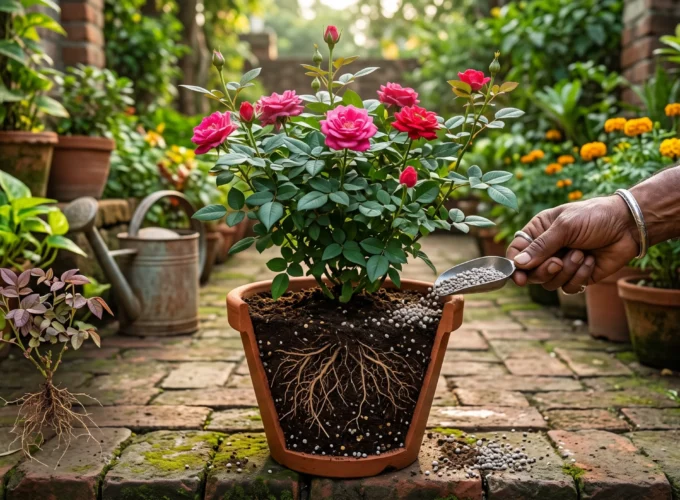
Add 1–2 handfuls of vermicompost around the plant’s base, keeping it slightly away from the stem.
Mix lightly into the loosened layer and water.
Do this every 3–4 weeks during the active growing season. In terrace vegetable beds or long planters, sprinkle a thin layer (0.25–0.5 inch) across the surface.
3. Make a simple “vermi tea” for quick boosts
Liquid feeds are great for stressed balcony plants or those in small pots that dry out often.
Soak a small quantity of vermicompost in a bucket of water (for example, 1 cup per 5 litres).
Stir and let it sit for 12–24 hours, then strain.
Use this diluted “tea” to water pots or spray around the root zone.
This gives a gentle nutrient flush and adds beneficial microbes back into tired container media.
Balcony-friendly routine for Shridhara Greens Vermicompost
A simple monthly schedule works for most urban gardeners:
Week 1: Top dress every pot with a handful of Shridhara Vermicompost and water well.
Week 3: Repeat light top dressing for heavy feeders like tomatoes, chillies, bhindi, and flowering plants.
Once a season: During major repotting or when shifting to bigger pots, remake the potting mix with 20–30% vermicompost.
Because Shridhara Vermicompost is fine-textured, moist, and free from sand or fillers, it spreads easily and breaks down quickly in confined balcony containers.
Tips to get the most from vermicompost in small spaces
Choose the right containers: Ensure all balcony and terrace pots have drainage holes so nutrients do not stagnate and roots stay healthy.
Combine with a good potting mix: Vermicompost works best when paired with airy media like cocopeat, perlite, or quality potting soil to balance nutrition and drainage.
Do not overdo it: More is not always better; too much organic matter can make soil heavy and soggy in deep plastic pots. Stick to 20–30% in the mix plus monthly top-ups.
Avoid harsh chemicals: Regular chemical NPK can disturb soil microbes; using Shridhara Vermicompost with mild organic sprays keeps your pot ecosystem balanced.
Store correctly: Keep your vermicompost in a cool, shaded, slightly moist condition so the microbes stay alive and active for several months.
Can you make your own vermicompost in an apartment?
If you have the interest and a bit of space, balcony vermicomposting is very doable:
Use a wide, shallow bin or stackable system with drainage and air holes.
Add moist bedding like shredded paper, cocopeat, and dried leaves.
Introduce earthworms and regular kitchen scraps (veg peels, tea leaves, etc.), avoiding meat and oily food.
Home-made vermicompost can then be combined with ready Shridhara Vermicompost for consistent quality and volume across all your balcony pots.
Final thoughts for Indian urban gardeners
For city homes where every pot on the balcony or terrace matters, vermicompost is one of the simplest upgrades you can make. It turns basic soil into living, nutrient-rich media that keeps plants greener, more productive, and more resilient—without complicated schedules or chemical inputs.
Using Shridhara Greens Vermicompost regularly—mixed into potting soil, added as monthly top dressings, and occasionally brewed into liquid feed—gives your balcony garden the same soil power as a well-loved farm, right in the middle of the city.