Simple, non-toxic steps to wipe out white cottony pests and keep your Shridhara‑nourished houseplants healthy all year.
How to spot mealybugs early
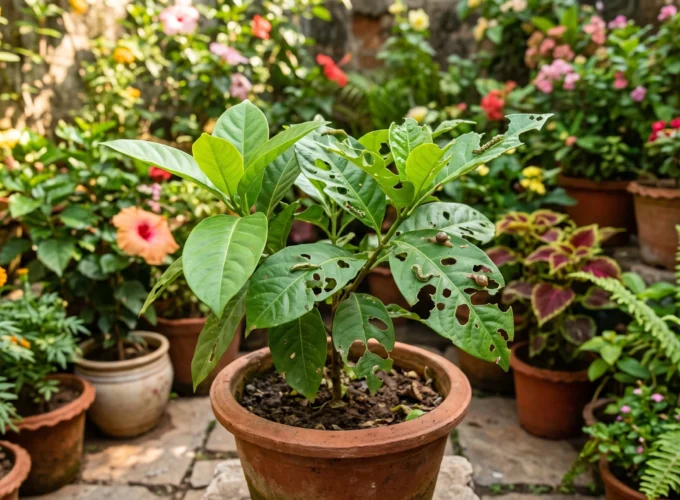
Mealybugs are tiny, oval insects covered in white cotton-like fluff that hide on new shoots, leaf joints, and undersides of leaves. They suck sap, cause curling and yellowing, and leave sticky honeydew that invites black sooty mould on indoor plants.
Early detection is vital, so:
- Inspect favourite plants weekly—especially succulents, hibiscus, hoyas, and philodendrons.
- Check tight nooks near leaf nodes, around buds, and where stems meet soil; mealybugs cluster in hidden, sheltered spots.
Step 1: Physical clean-up before any spray
Before reaching for Mealy Care or neem-based sprays, first remove as many pests as possible by hand. Experts recommend:
- Dabbing visible mealybugs with cotton buds dipped in isopropyl alcohol or a mild soap solution to instantly dissolve their wax coating.
- Rinsing small, sturdy plants in the sink or shower with lukewarm water to wash off loosened insects and honeydew.
- Isolating infested plants away from your main collection for at least 2 weeks so the bugs do not walk onto healthy plants.
This “debulking” makes any organic Mealy Care spray work faster and reduces the need for repeated heavy doses.
Step 2: Using Mealy Care and neem sprays safely
Shridhara’s Mealy Care is positioned like other ready‑to‑use, organic mealybug sprays—targeting sap-sucking pests while staying plant- and home-safe. Most natural products rely on combinations of botanicals such as neem oil, soaps, and essential oils that:
- Break down the pest’s waxy coat so it dries out
- Disrupt feeding and egg-laying, stopping population growth
- Leave minimal odour and residue indoors compared to harsh chemicals
Safe application basics:
- Spray in the evening or early morning to avoid leaf scorch under strong light.
- Coat all hiding spots—leaf undersides, nodes, stems, and even the top layer of soil—but stop before solution drips excessively.
- Repeat every 3–7 days for at least 2–3 rounds, as eggs hatch later even when adults are gone.
For sensitive houseplants, patch-test Mealy Care or neem spray on a small leaf first and wait 24 hours to check for burn or spotting.
Home remedies that pair well with Mealy Care
Along with a dedicated Mealy Care product, a few time-tested natural methods help break infestations faster:
- Neem oil solution: Mix neem oil with water and a little mild soap and spray regularly; it disrupts mealybug feeding and reproduction without synthetic pesticides.
- Neem leaf extract: Soaking and grinding neem leaves in water creates an effective spray specifically mentioned for mealybugs and other sucking insects.
- Soap sprays: Insecticidal soap or mild liquid soap helps dissolve protective wax and is often used as a first step before neem or Mealy Care treatment.
Avoid strong chemical cocktails indoors; a consistent routine of physical removal + neem/Mealy Care is usually enough for home collections.
Long-term prevention for indoor plants
Once plants are clean, keep mealybugs from returning by making conditions less favourable:
- Quarantine all new plants for 2 weeks, inspecting them closely before adding them to your main group.
- Wipe large leaves occasionally with damp cloth plus a drop of mild soap to remove dust and early pests.
- Avoid over-fertilising with high-nitrogen feeds; soft, sappy new growth attracts mealybugs far more than sturdy, balanced foliage.
- Use neem oil sprays preventively every 2–3 weeks on high-risk plants during warm seasons, at mild dilution appropriate for indoor use.
Handled this way—with early spotting, thorough mechanical cleaning, and a calm, repeating Mealy Care + neem routine—you can beat mealybugs naturally and keep your indoor plant jungle healthy, glossy, and chemical-free.