Fertilizers play an essential role in healthy plant growth. Whether you grow indoor plants, vegetables, flowers, herbs, or terrace garden plants, proper nutrition helps plants grow stronger, greener, and more productive.
But many gardeners often ask an important question:
Can natural fertilizers burn plants like chemical fertilizers do?
The answer is yes — but the risk is usually much lower compared to synthetic chemical fertilizers.
Natural fertilizers are generally considered safer because they release nutrients slowly and improve soil health organically. However, improper usage, overapplication, poor compost quality, or concentrated organic inputs can still stress or damage plants.
Understanding how fertilizer burn happens is extremely important for gardeners who want healthy plants without harming roots, leaves, or soil biology.
In this detailed guide, you will learn:
- What fertilizer burn is
- Whether natural fertilizers can damage plants
- Why chemical fertilizers burn plants faster
- Common mistakes gardeners make
- How to use natural fertilizers safely
- Best organic fertilizers for Indian gardening
What Is Fertilizer Burn?
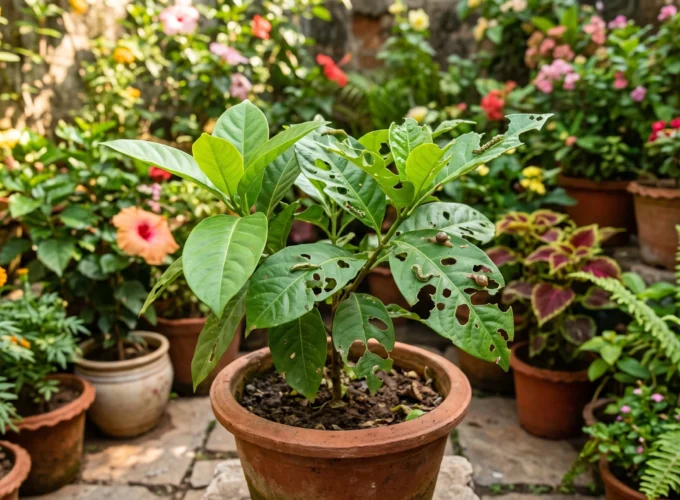
Fertilizer burn happens when plants receive excessive nutrients or concentrated salts that damage roots and plant tissues.
The most common symptoms include:
- Yellow leaf edges
- Brown leaf tips
- Wilting
- Dry patches
- Leaf curling
- Weak growth
- Root damage
In severe cases, fertilizer burn can kill the plant completely.
This issue is especially common when fertilizers are applied improperly or excessively.
Why Chemical Fertilizers Burn Plants Quickly
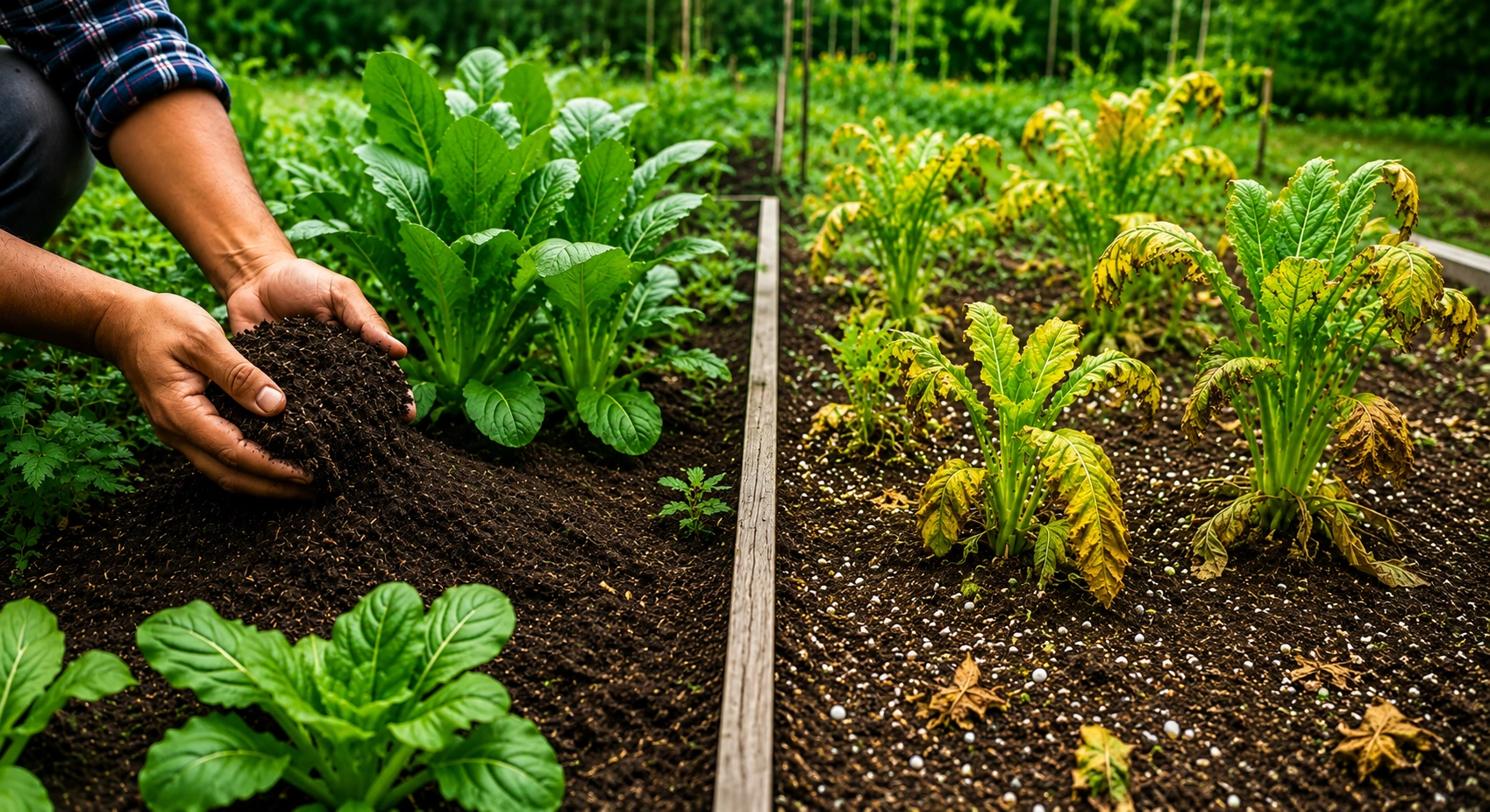
Chemical fertilizers contain highly concentrated nutrients that dissolve rapidly in water.
These fertilizers often contain:
- Nitrogen salts
- Synthetic minerals
- Fast-release nutrients
When used in excess, they create a high salt concentration around plant roots.
This causes:
- Moisture loss from roots
- Root dehydration
- Tissue damage
- Nutrient imbalance
Plants essentially struggle to absorb water properly due to excessive fertilizer concentration.
This process is known as osmotic stress.
Can Natural Fertilizers Burn Plants Too?
Yes, natural fertilizers can also burn plants under certain conditions.
However, the risk is usually much lower because organic fertilizers release nutrients gradually instead of all at once.
Natural fertilizers improve soil biology and microbial activity while feeding plants more slowly and naturally.
Still, problems can occur if:
- Excess quantities are used
- Fresh compost is applied directly
- Organic matter is immature
- Concentrated organic fertilizers are overused
- Soil drainage is poor
So while natural fertilizers are safer, they are not completely risk-free.
Why Natural Fertilizers Are Usually Safer
Natural fertilizers differ from chemical fertilizers in several important ways.
Slow Nutrient Release
Organic fertilizers release nutrients gradually through microbial breakdown.
This reduces sudden nutrient overload.
Lower Salt Concentration
Most natural fertilizers contain lower salt levels compared to synthetic fertilizers.
This decreases root stress significantly.
Improved Soil Health
Natural fertilizers support:
- Beneficial microbes
- Earthworm activity
- Soil structure
- Moisture retention
Healthy soil naturally protects plants from nutrient shock.
Better Long-Term Plant Growth
Organic nutrition improves balanced growth rather than rapid forced growth.
Plants become stronger and more resilient over time.
Common Natural Fertilizers Used in India
Indian gardeners commonly use:
- Vermicompost
- Cow manure
- Neem cake
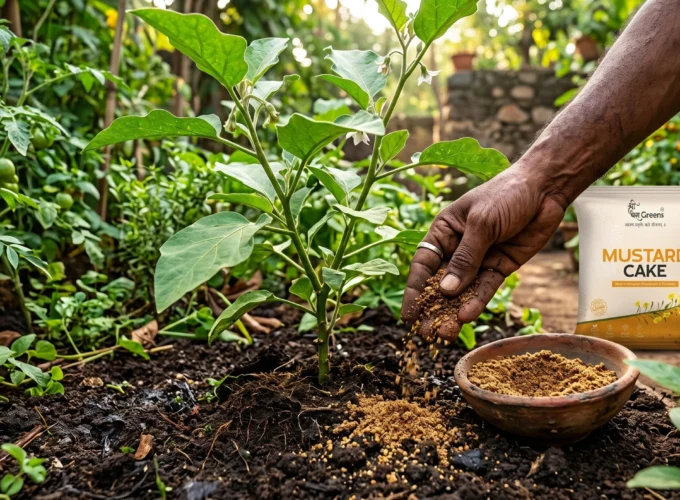
- Mustard cake fertilizer
- Seaweed fertilizer
- Bone meal
- Compost
- Organic liquid fertilizers
- Banana peel fertilizer
- Fish emulsion
- Panchagavya
You can explore organic gardening products and natural fertilizers at Shridhara Greens and browse the gardening collection available in the Online Gardening Shop.
Situations Where Natural Fertilizers Can Burn Plants
1. Using Fresh or Uncomposted Manure
Fresh manure generates heat and ammonia during decomposition.
Direct application can:
Burn roots
- Damage seedlings
- Create fungal problems
Always use composted manure properly.
2. Overusing Organic Fertilizers
Even organic fertilizers can become harmful when applied excessively.
Too much organic fertilizer may cause:
- Nutrient imbalance
- Salt buildup
- Root stress
- Excess foliage growth
Moderation is essential.
3. Applying Concentrated Liquid Fertilizers Incorrectly
Organic liquid fertilizers must usually be diluted.
Using concentrated solutions directly on plants may damage leaves and roots.
4. Poor Drainage Conditions
Overfertilization becomes more dangerous in compacted or waterlogged soil.
Excess nutrients accumulate around roots and create stress.
5. Immature Compost Usage
Half-decomposed compost continues decomposing inside the pot.
This process can:
- Increase heat
- Reduce oxygen
- Damage roots
Properly matured compost is always safer.
Signs of Fertilizer Burn from Natural Fertilizers
Although milder than chemical fertilizer burn, symptoms may still appear.
Common signs include:
- Brown leaf edges
- Leaf curling
- Wilting despite watering
- Yellowing leaves
- White buildup on soil surface
- Slow recovery
- Root damage
If symptoms appear shortly after fertilization, excess nutrients may be the cause.
How to Prevent Fertilizer Burn Naturally
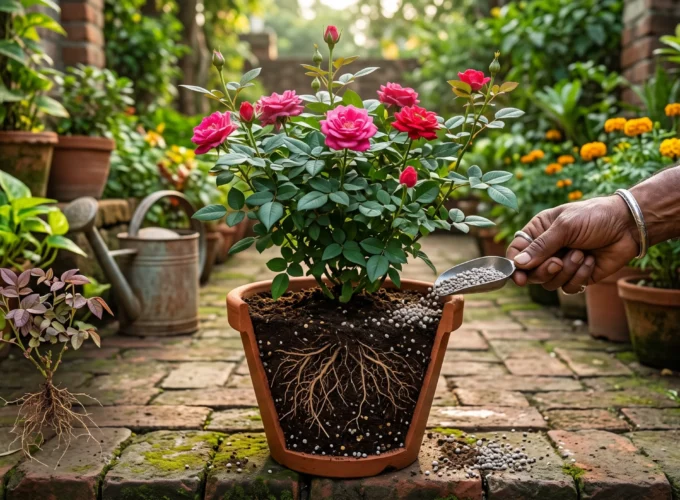
Use Recommended Quantities
Always follow dosage recommendations based on:
- Plant size
- Pot size
- Growth stage
More fertilizer does not always mean faster growth.
Choose Mature Organic Compost
Good compost should:
- Smell earthy
- Feel soft
- Look dark brown
- Be fully decomposed
Avoid raw or partially decomposed organic material.
Water Properly After Fertilizing
Water helps distribute nutrients evenly and reduces concentration near roots.
Avoid Fertilizing Dry Soil
Applying fertilizer to extremely dry soil may shock roots.
Slightly moist soil is ideal.
Improve Soil Drainage
Healthy drainage prevents nutrient accumulation and root stress.
Best Natural Fertilizers for Safe Gardening
Vermicompost
Vermicompost is one of the safest organic fertilizers available.
Benefits include:
- Gentle nutrient release
- Better microbial activity
- Improved root growth
- Lower burn risk
Seaweed Fertilizer
Seaweed-based fertilizers improve plant growth naturally without excessive salt buildup.
Compost
Good-quality compost improves soil health gradually and safely.
Neem Cake
Neem cake works as both fertilizer and natural pest control solution.
Organic Liquid Fertilizers
When diluted properly, organic liquid fertilizers support quick nutrient absorption safely.
Natural Fertilizers vs Chemical Fertilizers
| Feature | Natural Fertilizers | Chemical Fertilizers |
| Nutrient Release | Slow and steady | Fast and concentrated |
| Soil Health | Improves soil | May degrade soil over time |
| Salt Content | Lower | Higher |
| Risk of Burn | Lower | Higher |
| Microbial Support | Excellent | Limited |
| Environmental Impact | Eco-friendly | Can cause pollution |
Benefits of Natural Fertilizers Beyond Plant Nutrition
Natural fertilizers do much more than feed plants.
They also improve:
- Soil fertility
- Water retention
- Soil aeration
- Root strength
- Beneficial microorganisms
- Long-term soil productivity
This makes them ideal for:
- Organic gardening
- Terrace gardening
- Indoor plants
- Sustainable farming
Why Indian Gardeners Are Switching to Organic Fertilizers
More gardeners across India are moving toward natural fertilizers because of concerns related to:
- Chemical overuse
- Soil degradation
- Plant sensitivity
- Food safety
- Environmental sustainability
Organic gardening methods support healthier soil and healthier plants over time.
How to Recover Plants from Fertilizer Burn
If fertilizer burn occurs:
Flush the Soil
Water the soil thoroughly to remove excess nutrients.
Remove Excess Fertilizer
Clear visible fertilizer deposits from the soil surface.
Trim Damaged Leaves
Remove severely burnt leaves carefully.
Pause Fertilization
Allow the plant time to recover before feeding again.
Improve Drainage
Ensure excess water drains properly from pots.
Best Plants for Organic Fertilizers
Natural fertilizers work especially well for:
- Vegetable plants
- Herbs
- Indoor plants
- Flowering plants
- Fruit plants
- Terrace garden crops
- Seedlings
Organic feeding promotes balanced and healthier growth.
Frequently Asked Questions
Can organic fertilizer damage plants?
Yes, excessive or improperly prepared organic fertilizer can stress or burn plants, although the risk is lower than chemical fertilizers.
Which fertilizer burns plants faster?
Chemical fertilizers usually burn plants faster because of their high salt concentration and rapid nutrient release.
Is vermicompost safe for all plants?
Yes, vermicompost is generally safe for most plants when used properly.
How often should natural fertilizers be applied?
Application depends on plant type and fertilizer type, but moderate regular feeding is usually ideal.
Can natural fertilizers replace chemical fertilizers completely?
In many home gardening and organic gardening situations, yes. Natural fertilizers can successfully support healthy plant growth naturally.
Final Thoughts
So, can natural fertilizers burn plants like chemical fertilizers?
Technically, yes — but the chances are significantly lower when organic fertilizers are used correctly.
Natural fertilizers feed plants gradually, improve soil biology, and support healthier long-term growth. Unlike synthetic fertilizers that often create sudden nutrient overload, organic fertilizers work more naturally with the soil ecosystem.
The key to safe gardening lies in:
- Proper dosage
- Mature compost usage
- Good drainage
- Balanced feeding practices
For Indian gardeners looking to grow healthier plants naturally, organic fertilizers remain one of the safest and most sustainable choices.
If you are searching for trusted gardening products, organic fertilizers, composts, and plant care solutions, visit Shridhara Greens and explore the complete Online Gardening Shop for healthier gardening solutions.