
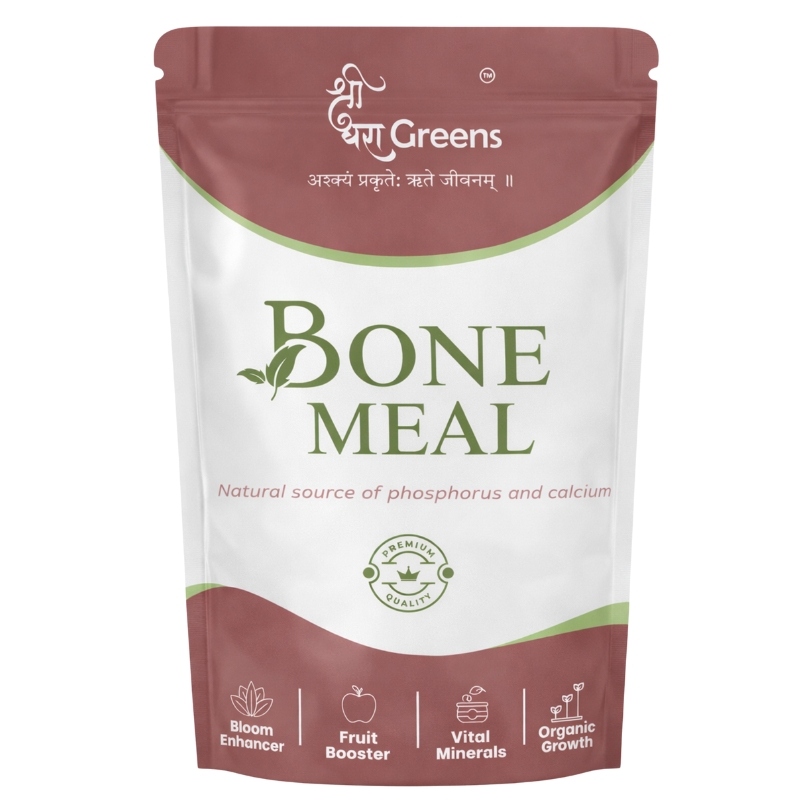
Natural Phosphorus & Calcium Fertilizer
Healthy plants need more than just water and sunlight—they require the right nutrients at the right time. If you notice weak roots, poor flowering, or slow growth, your plants may be lacking essential minerals like phosphorus and calcium.
That’s where bone meal for plants makes a difference. This organic, time-tested solution enriches soil, supports strong root development, and provides long-lasting nutrition, helping improve overall plant health and growth effectively.
₹150.00 Original price was: ₹150.00.₹135.00Current price is: ₹135.00.
Bone meal is a finely ground powder made from sterilized animal bones, used as an organic phosphorus fertilizer and a source of calcium fertilizers for soil enrichment; this slow-releasing bone meal powder for plants supplies essential phosphorus and calcium, supporting strong roots, better flowering, and overall plant health.
Bone meal is ideal for a wide variety of plants, including:
It works best in slightly acidic soil, where nutrients can be absorbed more effectively.
Using bone meal correctly ensures maximum benefits. Here’s a simple step-by-step guide:
– New plants: Mix 1–2 tablespoons into the planting hole
– Established plants: Apply around the base and lightly mix into the soil
| weight | "900 gm" |
|---|
Bone meal fertilizer provides phosphorus for plants and calcium, helping improve root growth, flowering, and overall plant strength.
Bone meal powder for plants is slow-releasing and typically starts showing results within a few weeks, with long-term benefits.
Yes, bone meal for plants can be used in containers. Just ensure proper mixing with the soil for even distribution.
Yes, bone meal fertilizer is an organic and natural soil amendment, making it safe for eco-friendly gardening.
No, when used correctly, bone meal is gentle and does not burn plants like chemical fertilizers.
Our shop
No posts were found for provided query parameters.
Nurturing Life, One Plant at a Time. Your trusted partner for greenery, growth, and sustainable living.
Shridhara Greens© 2026 All Rights Reserved. Design by Vivid Digisolution






Reviews
There are no reviews yet.