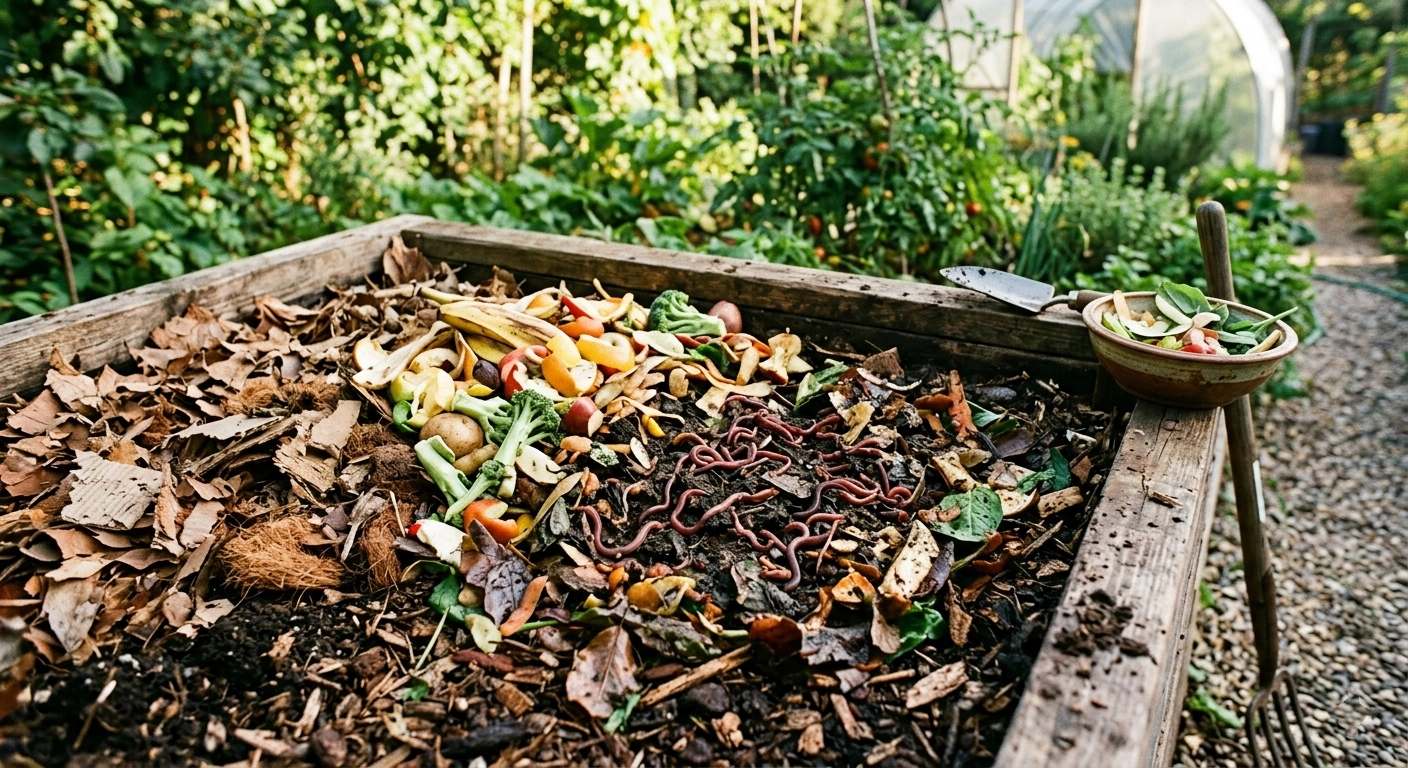
Vermicompost has become one of the most trusted organic fertilizers for home gardening, terrace gardening, farming, and nursery cultivation in India. Gardeners love it because it improves soil health naturally, supports plant growth, and helps plants grow healthier without harmful chemicals.
But many people still ask an important question:
What materials are actually used to make vermicompost?
The answer is simple — vermicompost is made using biodegradable organic waste materials processed naturally by earthworms.
However, not every organic material is suitable for vermicomposting. The quality of vermicompost depends heavily on:
- The raw materials used
- The composting process
- Earthworm activity
- Moisture balance
- Organic waste quality
Understanding the materials used in vermicompost helps gardeners choose better-quality compost and improve their organic gardening practices.
In this detailed guide, you will learn:
- What vermicompost is
- Which materials are commonly used
- Materials to avoid
- How vermicomposting works
- Why material quality matters
- Benefits of high-quality vermicompost
What Is Vermicompost?
Vermicompost is a nutrient-rich organic fertilizer created through the natural breakdown of organic waste by earthworms.
During vermicomposting:
- Earthworms consume organic material
- The waste passes through their digestive system
- Nutrient-rich castings are produced
These worm castings become highly beneficial for plants because they contain:
- Essential nutrients
- Beneficial microbes
- Organic matter
- Humic substances
- Plant growth-supporting compounds
Vermicompost improves:
- Soil fertility
- Root development
- Water retention
- Soil aeration
- Microbial activity
High-quality organic vermicompost for gardening and farming is available at Shridhara Greens and through the specialized Vermicompost Fertilizer Collection.
Main Materials Used to Make Vermicompost
Different biodegradable materials can be used in vermicomposting. The goal is to create nutrient-rich organic matter that earthworms can process efficiently.
Below are the most commonly used materials.
1. Cow Dung
Cow dung is one of the most widely used materials in vermicomposting across India.
It provides:
- Organic matter
- Nitrogen
- Beneficial microbes
- Moisture balance
Cow dung creates an ideal environment for earthworms and supports faster decomposition.
Most commercial vermicompost manufacturers use partially decomposed cow dung as a base material.
2. Dry Leaves
Dry leaves are excellent carbon-rich materials for vermicomposting.
They help:
- Improve aeration
- Balance moisture
- Maintain compost structure
Commonly used leaves include:
- Neem leaves
- Mango leaves
- Garden leaf litter
Leaves should usually be shredded or partially decomposed before use.
3. Vegetable Waste
Kitchen vegetable waste is highly popular for home vermicomposting.
Suitable vegetable scraps include:
- Potato peels
- Carrot peels
- Cucumber waste
- Leafy vegetable scraps
- Fruit peels
These materials decompose quickly and provide nutrients for worms.
4. Fruit Waste
Fruit waste is another valuable vermicomposting material.
Examples include:
- Banana peels
- Papaya waste
- Apple peels
- Watermelon rind
Fruit waste provides moisture and organic nutrients.
However, acidic fruits should be added in moderation.
5. Agricultural Waste
Farm waste materials are commonly used in large-scale vermicomposting.
These include:
- Crop residues
- Sugarcane waste
- Paddy straw
- Wheat straw
- Plant stems
Agricultural waste increases organic matter content significantly.
6. Coconut Coir and Cocopeat
Cocopeat and coconut coir improve:
- Moisture retention
- Aeration
- Compost texture
These materials help create a comfortable environment for earthworms.
7. Paper and Cardboard
Small amounts of shredded paper and cardboard can be added.
They provide carbon-rich material and help maintain balance in the composting system.
Only non-glossy, chemical-free paper should be used.
8. Garden Waste
Garden waste commonly used includes:
- Grass clippings
- Small plant trimmings
- Dead flowers
- Soft stems
Garden waste adds diversity to the organic matter composition.
Why Material Selection Matters in Vermicomposting
The quality of vermicompost depends directly on the materials used.
Good-quality raw materials produce compost that is:
- Nutrient-rich
- Odor-free
- Microbially active
- Safe for plants
Poor-quality materials may introduce:
- Chemicals
- Toxins
- Pathogens
- Excess salts
That is why trusted vermicompost manufacturers carefully select organic inputs.
Materials That Should NOT Be Used in Vermicompost
Not all organic waste is suitable for vermicomposting.
Certain materials may:
- Harm earthworms
- Produce foul odor
- Attract pests
- Slow decomposition
Avoid Meat and Dairy Products
These materials:
- Rot quickly
- Smell bad
- Attract insects and rodents
Avoid Oily and Greasy Food Waste
Excess oils disturb compost balance and slow decomposition.
Avoid Plastic and Non-Biodegradable Waste
Plastic contaminates vermicompost and damages soil quality.
Avoid Chemically Treated Waste
Materials sprayed heavily with pesticides or chemicals may harm earthworms.
Avoid Excess Citrus Waste
Highly acidic waste can disturb worm activity if added excessively.
How Earthworms Convert Waste into Vermicompost
Earthworms play the most important role in vermicomposting.
Common composting earthworms include:
- Eisenia fetida
- Red wigglers
- African night crawlers
These worms:
- Consume decomposing organic matter
- Break down nutrients
- Improve microbial activity
- Produce nutrient-rich castings
The resulting vermicompost becomes highly beneficial for plant growth.
Why Vermicompost Is Better Than Regular Compost
Both compost and vermicompost improve soil health, but vermicompost often contains:
- Higher microbial activity
- Better nutrient availability
- Faster plant response
- Improved soil conditioning
Earthworm digestion enhances nutrient quality significantly.
Benefits of High-Quality Vermicompost
Improves Soil Fertility
Vermicompost naturally enriches soil with essential nutrients.
Encourages Healthy Root Growth
Healthy roots improve overall plant development.
Enhances Water Retention
Organic matter helps soil retain moisture more effectively.
Improves Soil Aeration
Better soil structure improves oxygen availability for roots.
Supports Beneficial Microorganisms
Microbial activity improves nutrient cycling naturally.
Best Plants for Vermicompost
Vermicompost works exceptionally well for:
- Vegetable plants
- Flowering plants
- Fruit plants
- Herbs
- Indoor plants
- Terrace gardens
- Seedlings
- Nursery plants
It supports balanced and healthy plant growth naturally.
Why Vermicompost Is Becoming Popular in India
Indian gardeners and farmers increasingly prefer vermicompost because it:
- Supports organic farming
- Reduces chemical dependency
- Improves soil health
- Increases sustainability
- Helps eco-friendly gardening
Urban gardening trends have also increased demand for organic fertilizers.
How to Identify Good Vermicompost
High-quality vermicompost usually has:
- Dark brown or black color
- Earthy smell
- Fine texture
- Moist but not sticky consistency
Avoid compost that:
- Smells foul
- Contains plastic pieces
- Looks undecomposed
- Feels excessively wet
Reliable gardening brands provide cleaner and safer compost products.
Explore premium-quality organic compost solutions at Shridhara Greens Vermicompost Fertilizers.
Frequently Asked Questions
What is the main material used in vermicompost?
Cow dung and organic biodegradable waste are among the most commonly used materials.
Can kitchen waste be used for vermicomposting?
Yes. Vegetable peels, fruit scraps, and organic kitchen waste are commonly used.
Which worms are used in vermicomposting?
Red wigglers and Eisenia fetida are commonly used composting earthworms.
Can vermicompost be used for all plants?
Yes. Vermicompost works well for vegetables, flowers, indoor plants, herbs, and fruit plants.
Is vermicompost better than chemical fertilizer?
Vermicompost improves long-term soil health naturally, unlike many chemical fertilizers.
Final Thoughts
Vermicompost is created using carefully selected organic waste materials processed naturally by earthworms.
Materials like:
- Cow dung
- Vegetable waste
- Fruit scraps
- Dry leaves
- Agricultural waste
- Garden waste
all contribute to producing nutrient-rich organic fertilizer that improves plant growth and soil fertility naturally.
The quality of raw materials directly affects the final compost quality, which is why choosing trusted vermicompost products is important for successful gardening.
For Indian gardeners looking for healthier plants, sustainable gardening, and improved soil health, vermicompost remains one of the best natural fertilizer choices available today.
If you are looking for premium-quality vermicompost and organic gardening products, visit Shridhara Greens and explore the specialized Vermicompost Fertilizer Collection for naturally healthier gardening solutions.