Ever felt like your plants are getting water and sunlight—but still not growing the way they should?
In many cases, the problem isn’t care—it’s how well your soil holds moisture and nutrients. That’s where understanding vermiculite uses can completely change your gardening results.
If you’ve been searching “vermiculite uses for plants” or “how to use vermiculite in gardening”, this guide will help you understand exactly how it works and where it makes the biggest difference.
What Are Vermiculite Uses in Gardening and Why Do They Matter?
Vermiculite is a natural mineral that expands into lightweight flakes when heated. But what makes it valuable is not what it is—it’s how it works inside your soil.
The most important vermiculite uses include:
- Retaining moisture for longer periods
- Holding nutrients and releasing them slowly
- Improving soil structure
- Supporting root growth
Instead of constantly adjusting watering and feeding, vermiculite helps create a more stable growing environment.
How Does Vermiculite Help in Seed Germination?
One of the most popular vermiculite uses is in seed starting.
If you’ve asked “What is the best medium for seed germination?”, vermiculite is often recommended because:
- It keeps seeds consistently moist
- Prevents drying out
- Provides a soft, supportive structure
This increases the chances of faster and more uniform germination.
Can Vermiculite Improve Soil Moisture Retention?
Yes—and this is one of the biggest reasons gardeners use it.
Among all vermiculite uses, moisture retention stands out because:
- It absorbs water and holds it for longer
- Releases moisture gradually to plant roots
- Reduces frequent watering
If your plants dry out quickly, this is where vermiculite can help immediately.
How to Use Vermiculite in Potting Mix for Best Results?
If you’re wondering “how to use vermiculite in soil?”, the answer is simple—use it as part of a balanced mix.
Ideal mix:
- 60% base (coco peat or soil)
- 20% vermiculite
- 20% compost
This combination supports:
- Proper moisture balance
- Nutrient availability
- Healthy root development
This is one of the most practical vermiculite uses for everyday gardening.
Does Vermiculite Help Plants Grow Faster?
Indirectly, yes.
Vermiculite doesn’t act as a fertilizer, but among key vermiculite uses, it:
- Supports better root health
- Maintains consistent moisture
- Prevents stress caused by dryness
When roots are healthy, plant growth naturally improves.
Is Vermiculite Good for Indoor Plants?
Another common question: “Can I use vermiculite for indoor plants?”
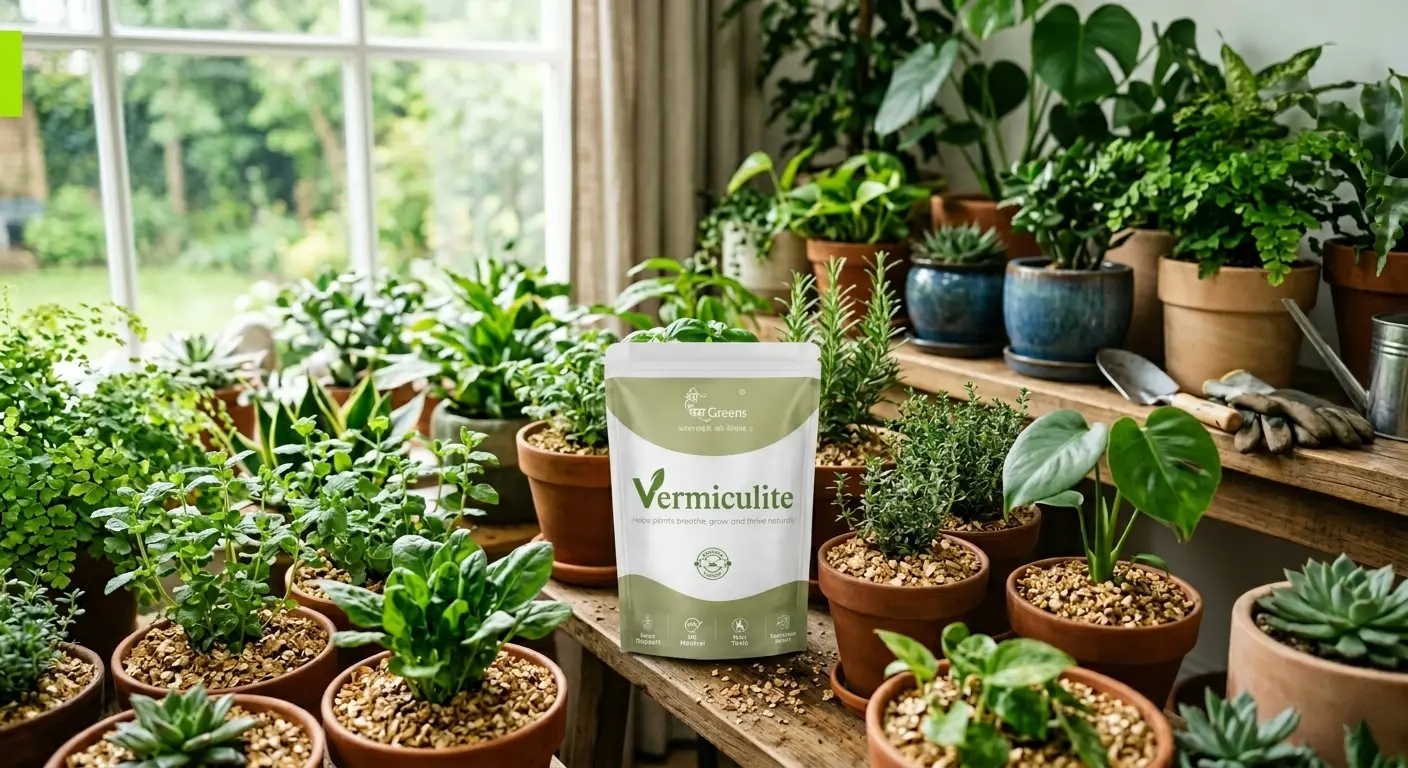
Yes—and it works especially well indoors because:
- It reduces watering frequency
- Maintains consistent soil moisture
- Keeps soil light and airy
This makes indoor plant care easier and more predictable.
What Are Vermiculite Uses for Vegetable Plants?
Vermiculite is highly effective in vegetable gardening.
Some important vermiculite uses for vegetables include:
- Improving water retention in grow bags
- Supporting nutrient absorption
- Reducing plant stress
It works especially well for:
- Tomatoes
- Leafy greens
- Herbs
Can Vermiculite Prevent Overwatering Problems?
It might sound surprising, but yes.
Even though vermiculite holds water, one of its smart uses is:
- Regulating moisture release
- Preventing sudden waterlogging
- Maintaining balance in the soil
This helps protect roots from damage caused by uneven watering.
Is Vermiculite Better Than Perlite?
This is one of the most searched comparisons.
Vermiculite uses:
- Moisture retention
- Nutrient holding
Perlite uses:
- Drainage improvement
- Airflow increase
Best approach:
Use both together for a balanced growing medium.
Can Vermiculite Be Used Alone?
Technically, yes—but not recommended.
Among all vermiculite uses, it works best when:
- Combined with other materials
- Balanced with drainage components
Using it alone can make the soil too moist.
How Does Vermiculite Help in Nutrient Retention?
One of the most overlooked vermiculite uses is nutrient management.
Vermiculite:
- Absorbs nutrients from fertilizers
- Releases them slowly over time
This ensures plants receive nutrients steadily instead of losing them through drainage.
What Are the Common Mistakes When Using Vermiculite?
Even though it’s simple, improper use can reduce its effectiveness.
Avoid these:
- Using too much vermiculite
- Not balancing with drainage materials
- Overwatering due to moisture retention
- Ignoring plant-specific needs
Using the right quantity is key to getting the best results.
How to Choose the Right Vermiculite for Plants Online?
If you’re searching “best vermiculite for plants online”, here’s what matters:
Quality Indicators:
- Lightweight and flaky texture
- Low dust content
- Clean and well-processed
Instead of experimenting with inconsistent materials, using well-prepared growing solutions from Shridhara Greens helps ensure better and more predictable plant performance.
Why Understanding Vermiculite Uses Can Transform Your Plant Growth
Most plant care problems don’t come from lack of effort—they come from imbalanced soil conditions.
Once you understand the real vermiculite uses, everything changes:
- Moisture becomes easier to manage
- Roots grow stronger
- Plants become more resilient
Instead of constantly fixing plant issues, you create a system where plants grow naturally and consistently.
With thoughtfully designed growing solutions available through Shridhara Greens, applying these concepts becomes simple—even for beginners.