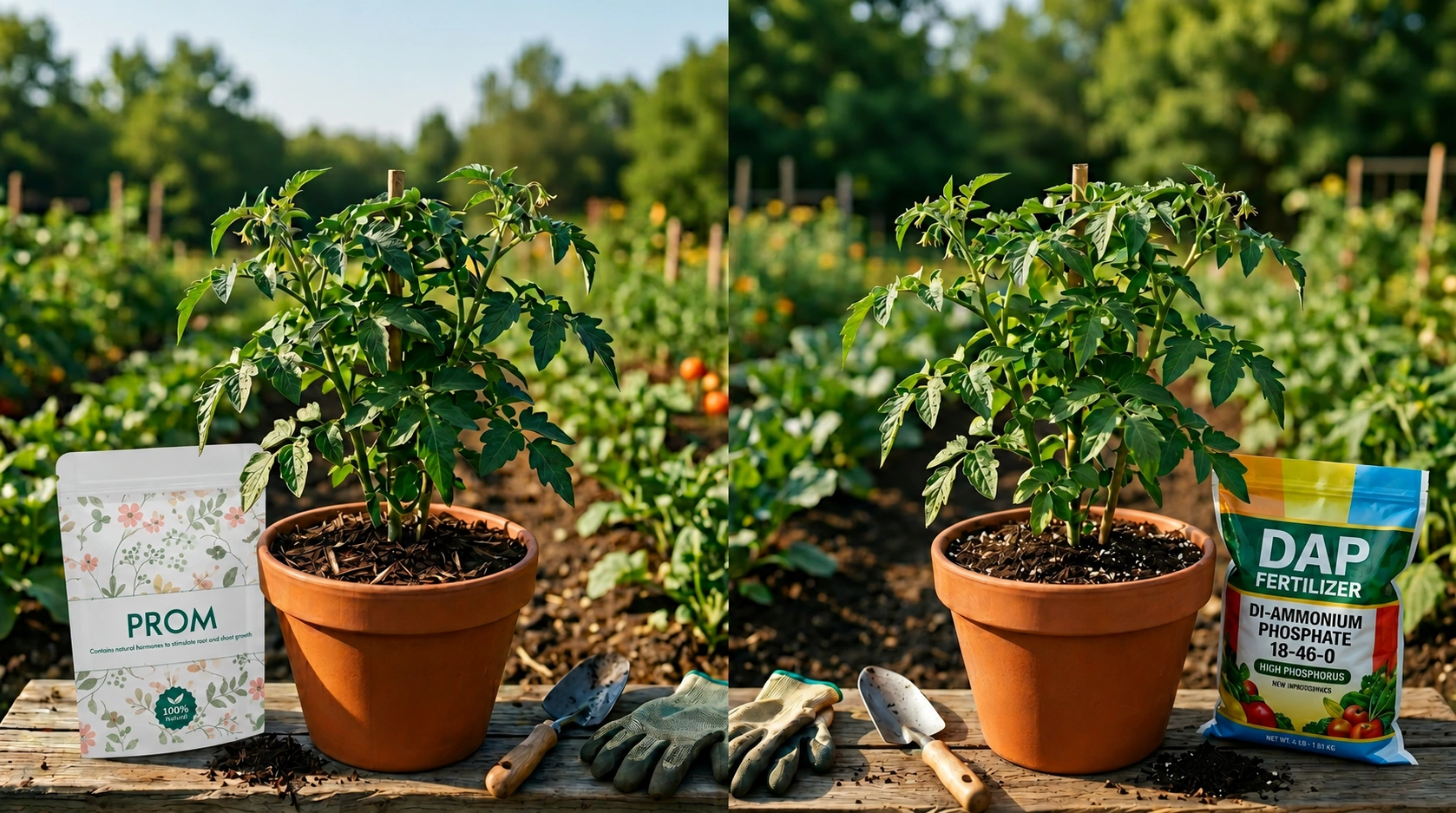
When plants show poor growth, weak roots, or reduced flowering, gardeners often look for phosphorus-rich fertilizers. Two commonly discussed options are:
- PROM fertilizer
- DAP fertilizer
This leads many gardeners and growers to ask:
PROM vs DAP — which fertilizer is actually better for plant growth?
The answer is not simply about choosing one fertilizer over another.
Both PROM and DAP supply phosphorus, but they work very differently inside the soil and support plants in different ways.
Understanding these differences is important for:
- Home gardeners
- Terrace gardeners
- Organic growers
- Farmers
- Nursery owners
In this guide, we will compare:
- PROM vs DAP fertilizer
- Nutrient release speed
- Soil impact
- Root development
- Plant growth performance
- Which fertilizer suits different gardening goals
For premium gardening solutions and phosphorus fertilizers, visit Shridhara Greens and explore the specialized PROM Fertilizer Collection.
What Is PROM Fertilizer?
PROM stands for:
Phosphate Rich Organic Manure
PROM fertilizer is an organic phosphorus fertilizer made by enriching organic manure with rock phosphate.
It contains:
- Organic matter
- Phosphorus
- Beneficial microbes
- Soil-improving nutrients
Unlike synthetic fertilizers, PROM works gradually and supports both plant nutrition and soil fertility.
PROM is widely used in:
- Organic farming
- Terrace gardening
- Vegetable cultivation
- Fruit plants
- Sustainable agriculture
What Is DAP Fertilizer?
DAP stands for:
Diammonium Phosphate
DAP is a chemical fertilizer that supplies:
- Phosphorus
- Nitrogen
It is known for:
- Quick nutrient availability
- Fast plant response
- High phosphorus concentration
DAP is commonly used in:
- Agriculture
- Commercial farming
- Crop establishment
- High-input cultivation
Because it dissolves quickly, plants may respond faster compared to organic phosphorus sources.
Why Phosphorus Matters for Plants
Before comparing PROM and DAP, it is important to understand phosphorus itself.
Phosphorus supports:
- Root development
- Flowering
- Fruiting
- Seed formation
- Energy movement inside plants
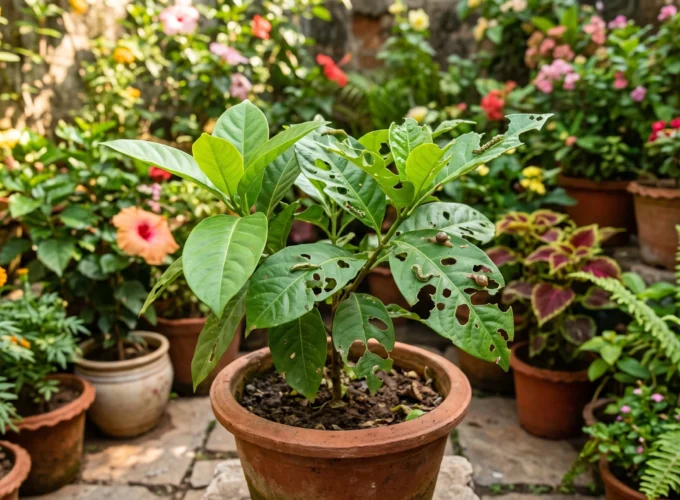
Plants lacking phosphorus may show:
- Slow growth
- Weak roots
- Poor flowering
- Reduced productivity
- Dark or purplish leaves
This makes phosphorus fertilizer important for healthy plant growth.
PROM vs DAP: Main Difference
The biggest difference is:
PROM = Organic Slow-Release Phosphorus
DAP = Chemical Fast-Release Phosphorus
Both supply phosphorus, but their behavior inside the soil is very different.
Nutrient Release: PROM vs DAP
PROM Fertilizer
PROM releases phosphorus gradually.
This slow-release behavior:
- Improves long-term nutrition
- Supports microbial activity
- Reduces nutrient loss
- Improves soil structure
Plants receive phosphorus steadily over time.
DAP Fertilizer
DAP dissolves rapidly.
This provides:
- Quick phosphorus availability
- Faster early plant response
- Immediate nutrient supply
However, rapid release may also lead to:
- Nutrient loss
- Reduced efficiency in some soils
- Shorter feeding duration
Soil Health Comparison
This is where PROM and DAP differ significantly.
PROM Improves Soil Health
PROM adds:
- Organic matter
- Beneficial microbes
- Better soil structure
It supports:
- Microbial activity
- Soil aeration
- Long-term fertility
Healthy soil creates healthier plants naturally.
DAP Focuses Mainly on Nutrient Supply
DAP supplies nutrients but contributes little organic improvement.
Excess chemical fertilizer use over time may contribute to:
- Soil compaction
- Reduced microbial activity
- Nutrient imbalance
Balanced usage becomes important.
Root Growth: PROM vs DAP
Both fertilizers support roots, but differently.
PROM and Root Development
PROM supports:
- Gradual root strengthening
- Soil biological activity
- Better nutrient absorption
This creates healthier long-term root systems.
DAP and Early Root Response
DAP often stimulates:
- Faster early growth
- Rapid nutrient availability
This may be useful during:
- Early crop establishment
- High-demand growth phases
Which Is Better for Flowering and Fruiting?
Flowering and fruiting depend heavily on phosphorus.
PROM for Long-Term Flowering Support
PROM supports:
- Sustainable flowering
- Soil fertility
- Balanced plant nutrition
Many gardeners prefer PROM for:
- Flower plants
- Fruit plants
- Organic cultivation
DAP for Fast Nutrient Boost
DAP may help when:
- A quick phosphorus supply is needed
- Plants show an acute deficiency
- Rapid response is required
However, long-term soil balance still matters.
PROM vs DAP for Organic Gardening
This is where PROM becomes highly preferred.
PROM supports:
- Organic farming
- Sustainable gardening
- Reduced chemical dependency
- Living soil systems
DAP is generally not considered an organic fertilizer.
For gardeners focused on:
- Organic vegetables
- Terrace gardening
- Natural soil improvement
PROM often becomes the preferred option.
Which Plants Benefit from PROM Fertilizer?
PROM works well for:
Flowering Plants
- Rose
- Hibiscus
- Marigold
Vegetable Plants
- Tomato
- Chili
- Brinjal
- Leafy vegetables
Fruit Plants
- Lemon
- Guava
- Pomegranate
Terrace and Container Gardens
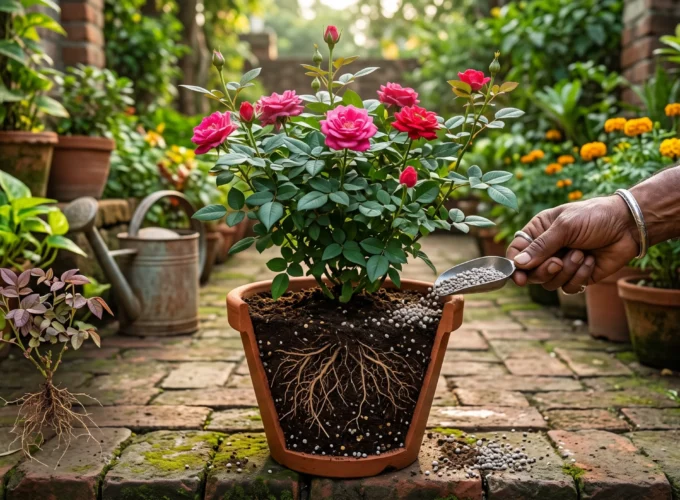
Organic phosphorus supports healthier soil in pots and grow bags.
Explore phosphorus nutrition products at Shridhara Greens PROM Fertilizer Collection.
PROM vs DAP: Quick Comparison Table
| Feature | PROM Fertilizer | DAP Fertilizer |
| Type | Organic fertilizer | Chemical fertilizer |
| Phosphorus release | Slow and gradual | Fast |
| Soil health | Improves soil | Limited improvement |
| Organic farming | Suitable | Usually not |
| Root development | Long-term support | Faster initial response |
| Microbial activity | Supports microbes | Limited support |
| Nutrient loss risk | Lower | Higher in some soils |
Common Mistakes While Choosing Phosphorus Fertilizer
Choosing Only Based on Speed
Fast results do not always mean healthier long-term growth.
Ignoring Soil Health
Healthy soil improves fertilizer performance.
Overusing Chemical Fertilizers
Excess fertilizer may create a nutrient imbalance.
Not Matching Fertilizer with Gardening Goals
Organic gardens and chemical farming often require different approaches.
Frequently Asked Questions
What is PROM fertilizer?
PROM stands for Phosphate Rich Organic Manure and is an organic phosphorus fertilizer.
Is PROM better than DAP?
It depends on gardening goals. PROM supports soil health and organic cultivation, while DAP provides faster nutrient availability.
Which fertilizer is better for organic gardening?
PROM is generally preferred for organic and sustainable gardening.
Does DAP work faster than PROM?
Yes. DAP releases nutrients more quickly.
Can PROM improve soil fertility?
Yes. PROM adds organic matter and supports soil microbes.
Final Thoughts
So, PROM vs DAP — which is better for plant growth?
The answer depends on what you want from your garden.
If you want:
- Fast nutrient response
- Quick phosphorus availability
DAP may provide temporary support.
But if your goal is:
- Healthy soil
- Sustainable gardening
- Strong root systems
- Long-term fertility
- Organic plant growth
then PROM fertilizer often becomes the smarter long-term choice.
Healthy plants grow best when soil health and balanced nutrition work together.
For trusted phosphorus fertilizers and gardening solutions, visit Shridhara Greens and explore the premium PROM Fertilizer Collection for healthier and more sustainable plant growth.