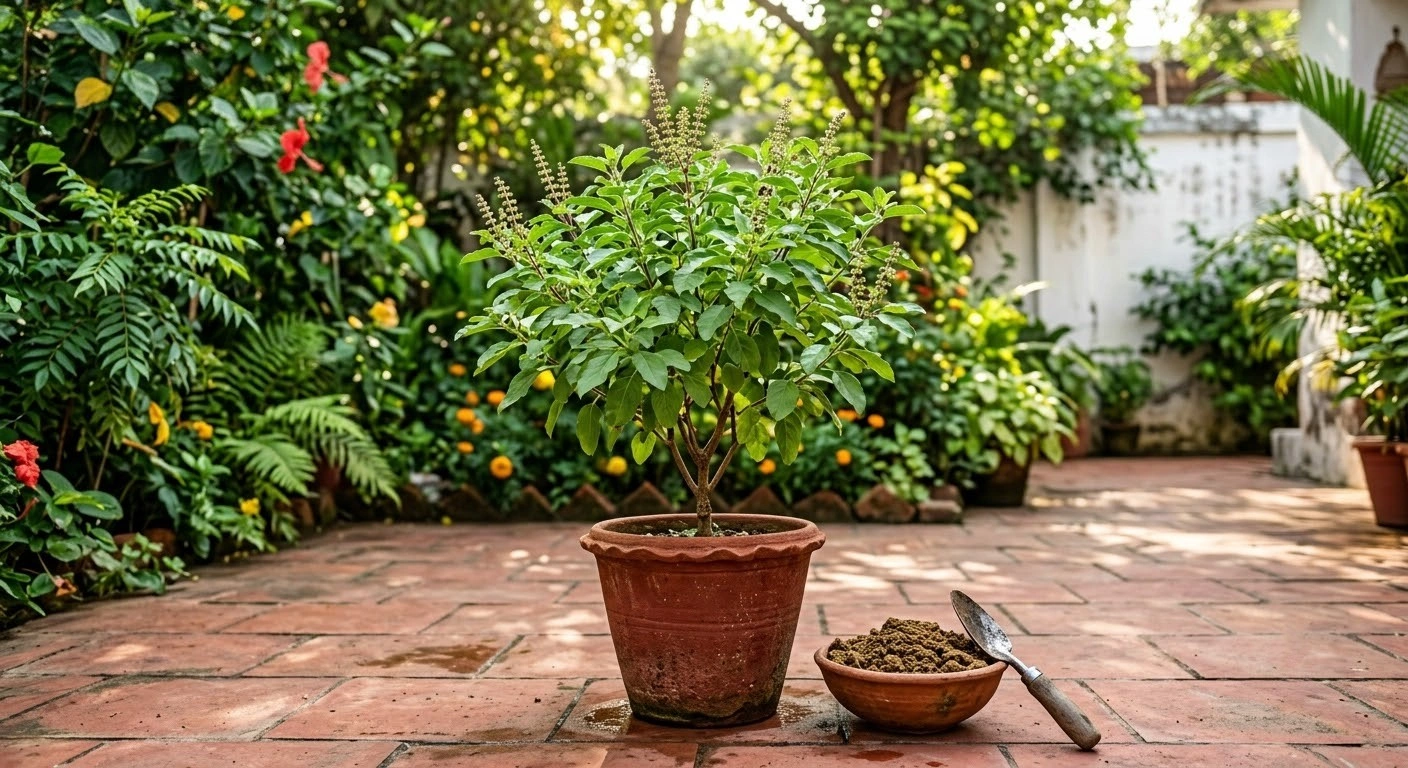
Tulsi (Holy Basil) is one of the most loved plants in Indian homes. Apart from its religious importance, Tulsi is also valued for its medicinal properties, pleasant aroma, and ability to attract pollinators.
To keep a Tulsi plant healthy, gardeners often ask:
“Can I use mustard cake fertilizer for my Tulsi plant?”
The simple answer is:
Yes, mustard cake is good for Tulsi plants when used correctly.
Mustard cake is a natural organic fertilizer that provides nutrients gradually, helping Tulsi develop healthy roots, lush green leaves, and stronger overall growth.
However, applying it incorrectly can lead to problems such as root damage, unpleasant odours, or nutrient imbalance.
In this guide, you’ll learn:
- Is mustard cake safe for Tulsi plants?
- Benefits of mustard cake fertilizer
- How to use mustard cake correctly
- Common mistakes to avoid
- Best practices for healthy Tulsi growth
For premium gardening products and organic fertilizers, visit https://shridharagreens.com/ or explore Mustard Cake Fertilizer at https://shridharagreens.com/product/mustard-cake-fertilizer/.
What Is Mustard Cake Fertilizer?
Mustard cake fertilizer is a natural organic manure made from the residue left after extracting oil from mustard seeds.
It contains essential nutrients that support healthy plant growth, including:
- Nitrogen
- Phosphorus
- Potassium
- Organic matter
- Micronutrients
Unlike chemical fertilizers, mustard cake releases nutrients slowly, making it a preferred choice for many home gardeners.
Is Mustard Cake Safe for Tulsi Plants?
Yes, Tulsi plants respond well to organic nutrition.
When applied in the correct quantity, mustard cake can help support:
- Healthy foliage
- Root development
- New branch formation
- Overall plant vigor
However, fresh mustard cake should never be applied directly in large quantities because it can become too concentrated around the roots.
Using well-prepared mustard cake fertilizer ensures better nutrient availability and reduces the risk of root stress.
Benefits of Mustard Cake for Tulsi Plants
Encourages Healthy Leaf Growth
Tulsi is primarily grown for its leaves.
Mustard cake provides nutrients that support:
- Fresh green foliage
- Dense branching
- Healthy leaf production
A well-fed Tulsi plant produces more usable leaves throughout the growing season.
Supports Strong Root Development
Healthy roots are the foundation of every healthy plant.
Organic fertilizers improve soil structure and help roots absorb water and nutrients more efficiently.
Strong roots also make Tulsi more resilient during hot summers.
Improves Soil Fertility Naturally
One of the biggest advantages of mustard cake fertilizer is that it feeds both the plant and the soil.
Regular use helps:
- Increase organic matter
- Improve soil texture
- Support beneficial microorganisms
- Enhance long-term soil health
Healthy soil creates healthier plants.
Promotes Vigorous Plant Growth
A nutrient-rich Tulsi plant typically develops:
- More branches
- Larger leaves
- Better canopy growth
Instead of growing tall and weak, the plant becomes fuller and healthier.
Supports Sustainable Gardening
Because mustard cake is an organic fertilizer, it fits perfectly into natural gardening practices.
It helps reduce dependence on synthetic fertilizers while improving soil quality over time.
How to Use Mustard Cake for Tulsi Plants
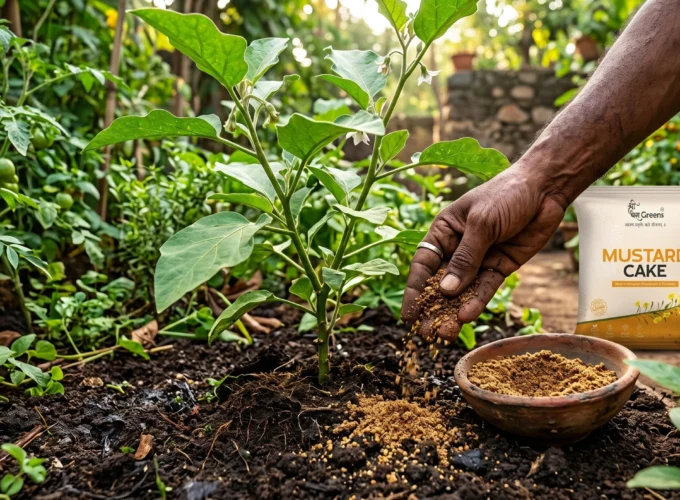
Using mustard cake correctly is just as important as choosing the right fertilizer.
Many experienced gardeners prefer to use it after proper preparation rather than applying it directly around the roots.
General tips include:
- Apply only a small quantity.
- Keep the fertilizer slightly away from the stem.
- Water the soil after application.
- Avoid overfeeding.
Following the product instructions ensures safe and effective use.
How Often Should You Feed Tulsi with Mustard Cake?
Tulsi does not require heavy feeding.
Applying an organic fertilizer occasionally during the active growing season is generally enough to maintain healthy growth.
Excess fertilizer can encourage unnecessary soft growth instead of balanced development.
Consistency is more important than quantity.
Signs Your Tulsi Plant May Need Nutrition
Your Tulsi plant may benefit from additional nutrients if you notice:
- Slow growth
- Small leaves
- Pale green foliage
- Fewer new branches
- Weak stems
Before adding fertilizer, also check:
- Sunlight
- Watering
- Drainage
- Pot size
Many plant problems are caused by environmental conditions rather than nutrition alone.
Common Mistakes to Avoid
Applying Fresh Mustard Cake Directly
Fresh mustard cake can be too strong if used improperly.
Always use it in the recommended manner.
Using Too Much Fertilizer
More fertilizer does not mean faster growth.
Overfeeding may stress the roots and reduce plant health.
Fertilizing a Dry Plant
Apply fertilizer when the soil has adequate moisture.
Extremely dry soil may increase root stress.
Ignoring Sunlight
Even the best fertilizer cannot replace sunlight.
Tulsi grows best with:
4–6 Hours of Direct Sunlight Daily
Without enough light, growth remains weak regardless of fertilizer.
Overwatering
Many gardeners confuse poor growth with underwatering.
Excess moisture can damage Tulsi roots and reduce nutrient absorption.
Allow the top layer of soil to dry slightly before watering again.
Other Natural Ways to Keep Tulsi Healthy
Along with mustard cake fertilizer, healthy Tulsi plants benefit from:
Quality Growing Media
Well-draining soil prevents root problems.
Regular Pruning
Pinching the growing tips encourages branching and bushier growth.
Adequate Air Circulation
Good airflow reduces disease problems.
Proper Watering
Water deeply, but avoid keeping the soil constantly wet.
Organic Compost
Adding compost occasionally improves long-term soil fertility.
Can Mustard Cake Be Used for Potted Tulsi Plants?
Yes.
Most Tulsi plants grown in Indian homes are cultivated in pots.
Container plants gradually use up the nutrients available in the potting mix.
Organic fertilizers such as mustard cake help replenish nutrients while improving soil health.
Regular care helps maintain vigorous growth throughout the year.
Frequently Asked Questions
Is mustard cake good for Tulsi?
Yes. Mustard cake is a natural organic fertilizer that supports healthy leaf growth, root development, and overall plant vigor when used correctly.
Can I apply mustard cake directly to the soil?
It is best to use mustard cake as recommended on the product instructions rather than applying large quantities directly around the roots.
How often should I fertilize a Tulsi plant?
Tulsi generally requires light, periodic feeding during its active growing season. Avoid excessive fertilization.
Does mustard cake increase Tulsi leaf growth?
Healthy nutrition supports vigorous foliage development, especially when combined with proper sunlight and watering.
What is the best fertilizer for Tulsi plants?
Organic fertilizers such as mustard cake, compost, and vermicompost are popular choices for maintaining healthy Tulsi plants.
Final Thoughts
If you’re looking for a natural way to nourish your Tulsi plant, mustard cake fertilizer is an excellent organic option.
When used correctly, it can help:
✔ Promote lush green leaves
✔ Encourage stronger root growth
✔ Improve soil fertility
✔ Support healthy branching
✔ Maintain long-term plant health
Remember that fertilizer alone isn’t enough.
Healthy Tulsi plants also require:
- Bright sunlight
- Well-draining soil
- Proper watering
- Regular pruning
- Good air circulation
By combining these simple practices with organic nutrition, your Tulsi plant can remain healthy, vibrant, and productive throughout the year.
For premium gardening products and high-quality Mustard Cake Fertilizer, visit https://shridharagreens.com/.