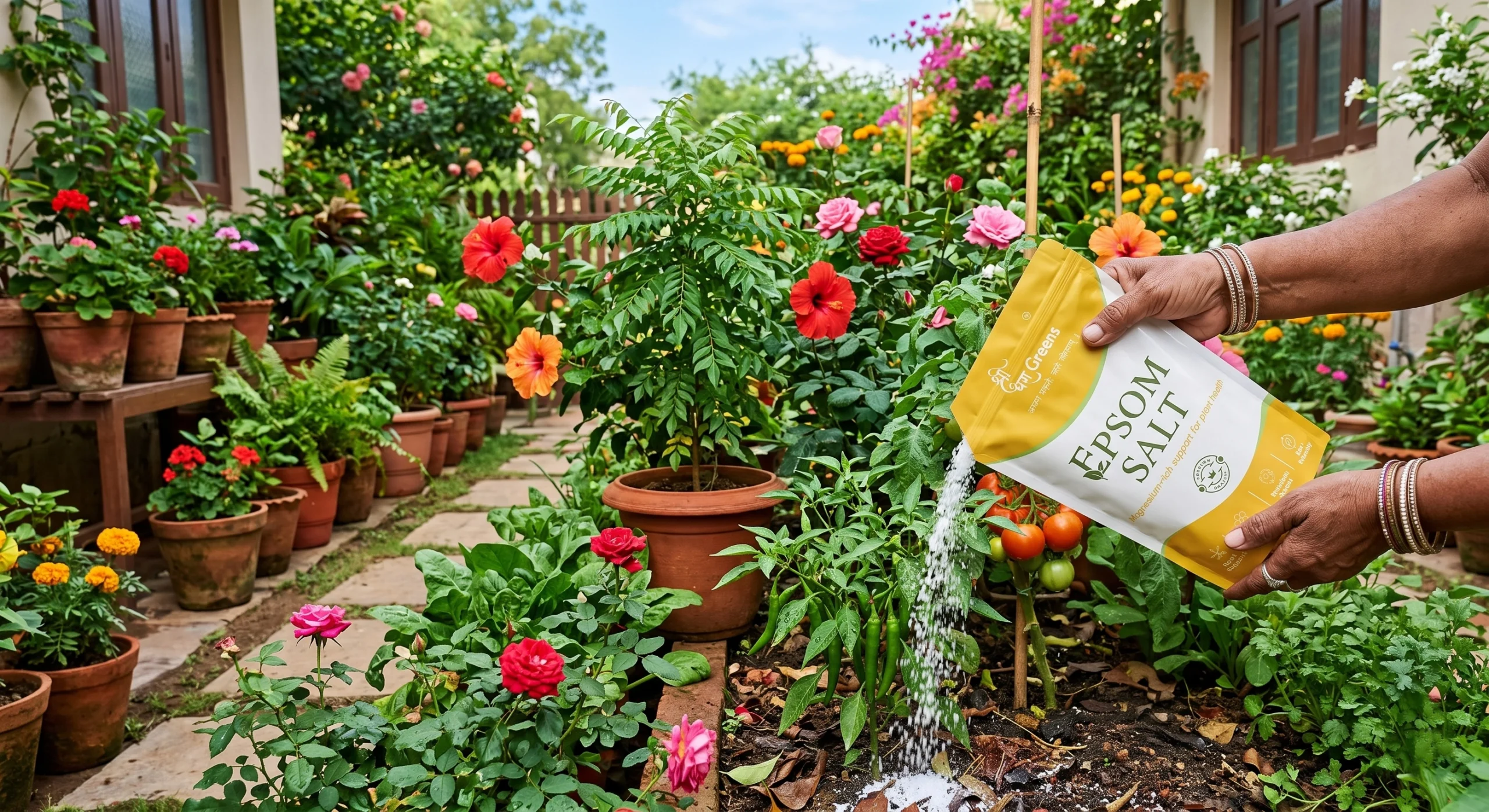
If you’ve been gardening for a while, you’ve probably heard someone recommend Epsom Salt for plants.
Some gardeners swear by it for greener leaves.
Others use it to encourage better flowering and fruiting.
But an important question remains:
Do all plants benefit from Epsom Salt?
The answer is not necessarily.
Epsom Salt is an excellent gardening supplement when used correctly, but it isn’t a universal fertilizer. It works best for plants that need additional magnesium and sulphur, two essential nutrients involved in healthy plant growth.
Understanding which plants respond well to Epsom Salt can help you use it more effectively and avoid unnecessary applications.
In this guide, you’ll learn:
- What Epsom Salt is
- How it helps plants
- Which plants benefit the most
- When to use Epsom Salt
- Common mistakes to avoid
For premium gardening products and plant care solutions, visit https://shridharagreens.com/. You can also explore Epsom Salt for Plants at https://shridharagreens.com/product/epsom-salt-for-plants/.
What Is Epsom Salt?
Epsom Salt is a naturally occurring mineral compound made of:
- Magnesium
- Sulphur
- Oxygen
Its scientific name is:
Magnesium Sulphate
Unlike table salt, Epsom Salt does not contain sodium, making it suitable for gardening when used properly.
Magnesium plays a key role in:
- Chlorophyll production
- Photosynthesis
- Leaf development
- Nutrient absorption
Sulphur supports:
- Protein formation
- Enzyme activity
- Healthy plant growth
Because of these functions, Epsom Salt is commonly used as a supplement in home gardens.
Benefits of Epsom Salt for Plants
When plants have low magnesium levels, Epsom Salt can help support healthy growth.
Some of its key benefits include:
- Promotes greener leaves
- Supports chlorophyll production
- Encourages healthy flowering
- Improves root activity
- Helps plants utilize nutrients efficiently
- Supports fruit development
- Encourages healthier plant growth
Remember:
Epsom Salt is a magnesium supplement, not a complete fertilizer.
Plants still require balanced nutrition from compost, organic fertilizers, or other plant nutrients.
Which Plants Benefit Most from Epsom Salt?
Not every plant needs additional magnesium.
However, several popular garden plants often respond well when magnesium is lacking.
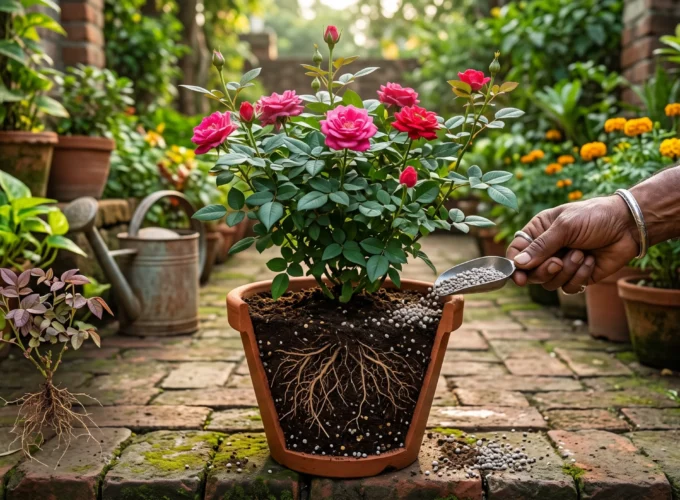
1. Roses
Roses are among the most commonly recommended plants for Epsom Salt.
Gardeners often use it to support:
- Healthy foliage
- Strong stems
- Better flowering
- New shoot development
Healthy roses require balanced nutrition, and magnesium plays an important supporting role.
2. Tomatoes
Tomatoes are heavy feeders.
During active growth, they use significant amounts of nutrients.
Magnesium helps support:
- Healthy green leaves
- Photosynthesis
- Fruit development
Tomato plants showing yellowing between leaf veins may benefit from magnesium supplementation if a deficiency is confirmed.
3. Chilli and Capsicum Plants
Peppers also respond well to balanced nutrition.
Epsom Salt is commonly used during:
- Vegetative growth
- Flowering
- Fruiting stages
Healthy leaves allow the plant to produce more energy for fruit development.
4. Cucumbers
Cucumber plants grow rapidly and produce numerous fruits during the season.
Magnesium supports healthy leaf function, which contributes to overall plant productivity.
5. Flowering Plants
Many flowering plants benefit from healthy magnesium levels.
Examples include:
- Hibiscus
- Marigold
- Bougainvillea
- Jasmine
- Petunia
Healthy foliage supports better energy production, which can contribute to stronger flowering.
6. Indoor Plants
Popular indoor plants that may benefit include:
- Peace Lily
- Money Plant
- Areca Palm
- Philodendron
- Monstera
Indoor plants growing in containers often depend entirely on the nutrients available in the potting mix.
Over time, supplementing essential nutrients may support healthy growth.
7. Citrus Plants
Fruit trees such as:
- Lemon
- Orange
- Sweet Lime
require magnesium for healthy leaf development.
Yellowing between the veins of older leaves can sometimes indicate magnesium deficiency.
8. Leafy Green Vegetables
Leafy vegetables like:
- Spinach
- Lettuce
- Fenugreek
- Coriander
depend heavily on chlorophyll production.
Healthy magnesium levels support greener foliage and vigorous growth.
Signs Your Plant May Need Epsom Salt
Not every yellow leaf indicates magnesium deficiency.
However, common symptoms may include:
Yellowing Between Leaf Veins
The veins remain green while the tissue between them turns yellow.
Older Leaves Affected First
Magnesium is a mobile nutrient, so plants often move it from older leaves to newer growth.
Slow Growth
Plants may appear less vigorous than usual.
Pale Green Foliage
Reduced chlorophyll production may lead to lighter-colored leaves.
If these symptoms persist, consider checking the plant’s overall nutrition and growing conditions before applying supplements.
Plants That May Not Need Epsom Salt
Epsom Salt is not necessary for every plant.
If the soil already contains sufficient magnesium, adding more may not provide additional benefits.
Plants growing in fertile, well-balanced soil often receive enough magnesium naturally.
Always avoid applying supplements simply because they are popular.
How to Use Epsom Salt for Plants
The correct application depends on the plant type and growing conditions.
Common methods include:
Soil Application
Used to supplement magnesium around the root zone.
Foliar Spray
Diluted solutions can be sprayed on leaves when appropriate.
During Active Growth
Many gardeners apply Epsom Salt during periods of active growth, flowering, or fruit development.
Always follow the product instructions and recommended dosage.
Common Mistakes to Avoid
Many gardeners assume Epsom Salt is a cure for every plant problem.
That isn’t true.
Avoid these common mistakes:
❌ Using Epsom Salt instead of fertilizer
❌ Applying excessive quantities
❌ Treating every yellow leaf with magnesium
❌ Ignoring soil health
❌ Expecting instant results
Healthy plants need balanced nutrition, quality growing media, proper watering, and adequate sunlight—not just one supplement.
Epsom Salt vs Fertilizer
This is one of the most common gardening questions.
Epsom Salt
Provides:
- Magnesium
- Sulphur
Fertilizer
Provides major nutrients like:
- Nitrogen
- Phosphorus
- Potassium
Epsom Salt complements a fertilization program but does not replace a complete fertilizer.
Frequently Asked Questions
Which plants benefit most from Epsom Salt?
Roses, tomatoes, chillies, peppers, cucumbers, citrus plants, flowering plants, and some indoor plants may benefit when magnesium levels are low.
Is Epsom Salt a fertilizer?
No. Epsom Salt is a magnesium sulphate supplement and does not provide all the nutrients plants need.
Can I use Epsom Salt on potted plants?
Yes. Container plants may benefit from magnesium supplementation if a deficiency is present, as nutrients are depleted over time.
Does Epsom Salt help flowering plants?
Magnesium supports healthy photosynthesis and overall plant growth, which can contribute to better flowering when magnesium deficiency is corrected.
Can too much Epsom Salt harm plants?
Yes. Excessive use may create nutrient imbalances. Always apply according to the product recommendations.
Final Thoughts
Epsom Salt has earned its place as a popular gardening supplement because it supplies magnesium, an essential nutrient for healthy plant growth.
However, the best results come from using it where it is actually needed.
Plants such as:
✔ Roses
✔ Tomatoes
✔ Chillies
✔ Cucumbers
✔ Flowering ornamentals
✔ Citrus trees
often respond well when magnesium deficiency is corrected.
Remember, Epsom Salt is not a substitute for a complete fertilizer. It works best as part of a balanced plant care routine that includes healthy soil, quality growing media, adequate watering, proper sunlight, and regular feeding.
For premium gardening products and Epsom Salt for Plants, visit https://shridharagreens.com/ or explore https://shridharagreens.com/product/epsom-salt-for-plants/ to support healthier, greener, and more productive plants naturally.