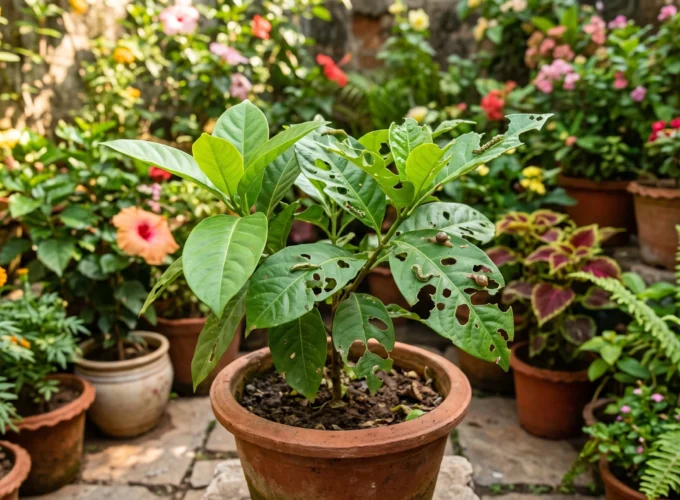
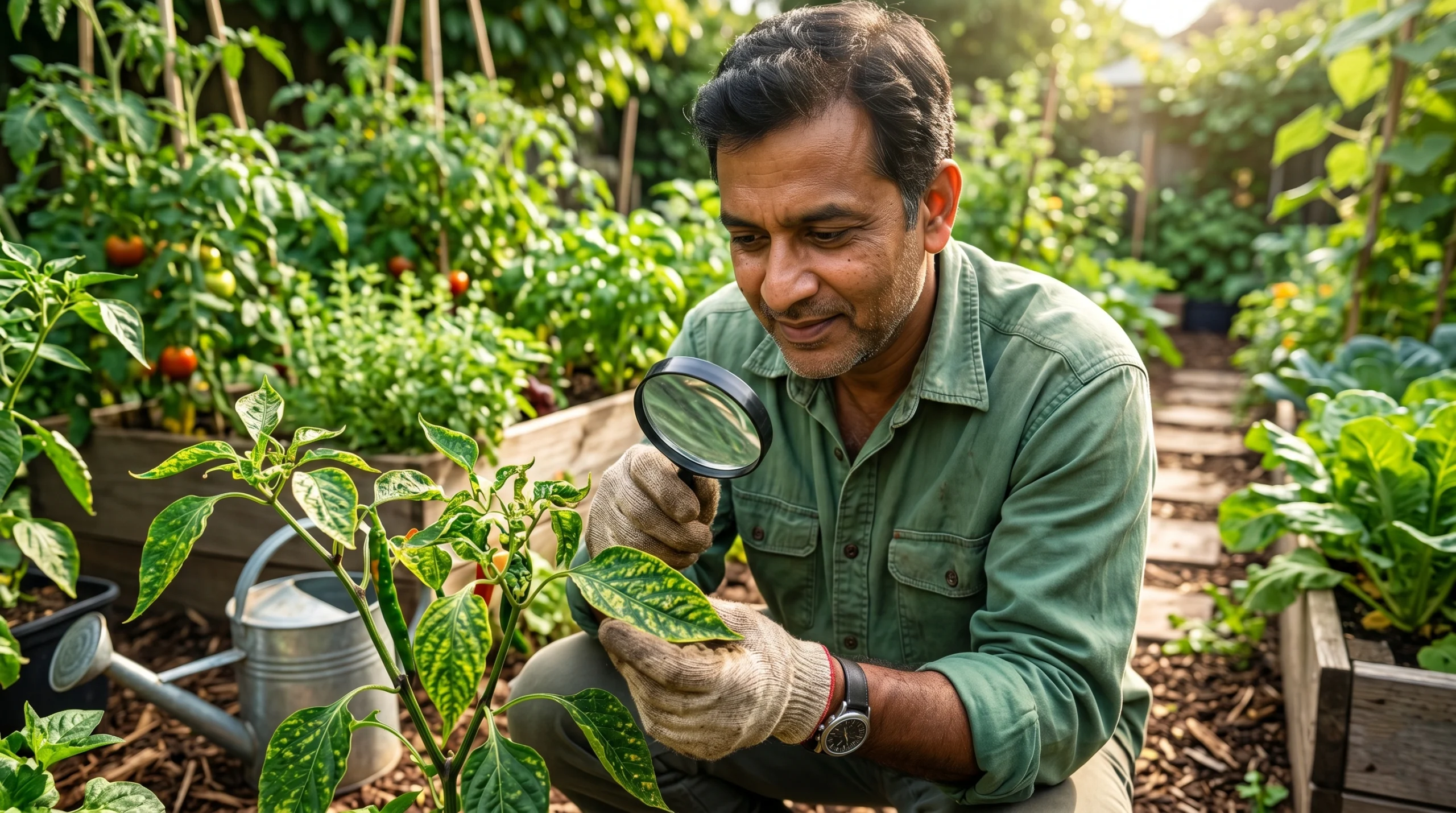
You notice strange yellow patterns on your plant’s leaves.
Growth becomes distorted.
Flowers stop appearing.
New leaves emerge twisted or curled.
Naturally, the first question most gardeners ask is:
“Can I treat a plant virus and save my plant?”
It’s an important question because plant viruses are among the most misunderstood plant health problems.
Many gardeners mistake viral infections for:
- Nutrient deficiencies
- Watering issues
- Pest damage
- Environmental stress
Unfortunately, plant viruses behave differently from fungal or bacterial diseases.
The good news?
While plant viruses are difficult to cure, there are several ways to manage infected plants, prevent spread, and protect the rest of your garden.
In this guide, you’ll learn:
- What plant viruses are
- Whether plant viruses can be treated
- Common symptoms of viral infections
- How viruses spread
- Prevention and management strategies
- Best practices for Indian home gardeners
For premium gardening products and plant care solutions, visit https://shridharagreens.com/.
What Is a Plant Virus?
A plant virus is a microscopic infectious agent that enters plant cells and interferes with normal growth.
Once inside the plant, the virus can affect:
- Photosynthesis
- Nutrient movement
- Growth processes
- Flower development
- Fruit production
Unlike nutrient deficiencies, viruses actually invade the plant’s tissues.
This is why they are often much harder to manage.
Can Plant Viruses Be Cured?
Let’s address the most important question first.
In Most Cases, No.
Unlike fungal diseases that can often be controlled with fungicides or bacterial diseases that can sometimes be managed through sanitation, there is usually no direct cure for an established plant viral infection.
Once a virus spreads throughout the plant:
It generally remains inside the plant for life.
This surprises many gardeners, especially beginners.
However, understanding this reality helps you focus on prevention and management rather than ineffective treatments.
Why Are Plant Viruses So Difficult to Treat?
Plant viruses live inside plant cells.
Because of this:
- They are protected from many external treatments
- They spread internally through plant tissues
- Removing visible symptoms does not remove the virus
Unlike pests that can be sprayed or fungi that can be treated on plant surfaces, viruses become part of the plant’s biological system.
This makes complete elimination extremely difficult.
Common Signs of a Viral Infection
Recognizing symptoms early is essential.
The sooner you identify a possible virus, the easier it becomes to protect nearby plants.
1. Mosaic Leaf Patterns
One of the classic symptoms of plant viruses is:
Mosaic Patterning
Leaves develop irregular patches of:
- Light green
- Dark green
- Yellow
The leaf surface appears mottled or marbled.
2. Leaf Curling and Distortion
Many viruses affect normal leaf development.
You may notice:
- Twisted leaves
- Curled edges
- Wrinkled foliage
- Abnormal leaf shapes
These symptoms often persist despite proper watering and fertilization.
3. Stunted Growth
Virus-infected plants frequently appear smaller than healthy plants.
Common signs include:
- Short stems
- Reduced branching
- Smaller leaves
- Slower growth
Growth often remains poor even under ideal conditions.
4. Poor Flowering
Flowering plants may produce:
- Fewer buds
- Smaller blooms
- Deformed flowers
Many gardeners initially mistake this for a nutrient problem.
5. Reduced Fruit Production
Fruiting plants may develop:
- Smaller fruits
- Fewer fruits
- Misshapen fruits
- Poor quality produce
Vegetable crops are particularly vulnerable.
How Do Plant Viruses Spread?
Understanding transmission is the key to prevention.
Insect Vectors
Many viruses spread through insects.
Common carriers include:
- Aphids
- Whiteflies
- Thrips
- Leafhoppers
These insects feed on infected plants and then transfer the virus to healthy plants.
Contaminated Tools
Pruning tools can spread infected plant sap.
Always clean:
- Pruners
- Scissors
- Knives
between plants.
Infected Plant Material
Viruses may enter gardens through:
- Nursery plants
- Cuttings
- Seedlings
Starting with healthy plant material is important.
Human Handling
Gardeners can unintentionally transfer viruses through routine maintenance.
What Should You Do If You Suspect a Plant Virus?
If you notice multiple symptoms:
Inspect the Plant Carefully
Look for:
- Mosaic patterns
- Distorted growth
- Curling leaves
- Stunted development
Check for Insect Activity
Many viral outbreaks begin with pest infestations.
Pay special attention to:
- Aphids
- Whiteflies
- Thrips
Isolate the Plant
Keep suspected plants away from healthy specimens.
This reduces the risk of spread.
Monitor Symptoms
Observe whether symptoms continue to worsen.
Viral infections often persist even after improving plant care.
Can an Infected Plant Still Survive?
Yes.
Not all virus-infected plants die immediately.
Some plants continue growing for months or even years.
However, they may experience:
- Reduced vigor
- Lower flowering
- Poor fruit production
- Increased susceptibility to stress
The severity depends on:
- Virus type
- Plant species
- Environmental conditions
Can Healthy Plants Resist Viral Infections Better?
Healthy plants are generally more resilient.
Strong plants often tolerate stress more effectively.
Support plant health through:
✔ Balanced nutrition
✔ Proper watering
✔ Good growing media
✔ Adequate sunlight
✔ Regular pest monitoring
While these practices cannot cure viruses, they help maintain overall plant vigor.
The Importance of Pest Control
Because insects are major virus carriers, pest management is one of the most effective prevention strategies.
Regular monitoring helps identify:
- Aphids
- Whiteflies
- Thrips
before they spread problems throughout the garden.
Early intervention often prevents larger outbreaks.
Common Myths About Plant Viruses
Myth #1: Fertilizer Can Cure a Virus
False.
Fertilizers improve nutrition but do not eliminate viruses.
Myth #2: More Water Will Fix the Problem
False.
Viral infections are not caused by dehydration.
Myth #3: Only Vegetable Plants Get Viruses
False.
Many ornamental and indoor plants can also be affected.
Myth #4: Viral Symptoms Always Appear Immediately
False.
Symptoms may take time to become visible.
Which Plants Are Most Vulnerable?
Many plants can be affected.
Common examples include:
Vegetable Plants
- Tomato
- Chilli
- Capsicum
- Cucumber
Fruit Plants
- Papaya
- Banana
- Citrus
Flowering Plants
- Rose
- Chrysanthemum
- Petunia
Ornamental Plants
Many decorative plants are also susceptible.
How to Prevent Plant Viruses
Prevention remains the most effective strategy.
Start with Healthy Plants
Buy from reputable sources whenever possible.
Control Insect Pests
Monitor and manage common virus-carrying insects.
Maintain Garden Hygiene
Clean tools regularly.
Remove Severely Infected Plants
In some situations, removal helps protect nearby plants.
Support Overall Plant Health
Healthy growing conditions improve resilience.
Frequently Asked Questions
Can plant viruses be cured naturally?
Currently, there is no reliable method to completely cure most established plant viral infections.
Will fertilizer help a virus-infected plant?
Fertilizer may improve overall vigor, but cannot eliminate the virus.
How do I know if my plant has a virus?
Look for mosaic patterns, distorted leaves, stunted growth, and poor flowering.
Can plant viruses spread to other plants?
Yes. Many viruses spread through insects, tools, and infected plant material.
Should I remove an infected plant?
If symptoms are severe and nearby plants are at risk, removal may be necessary.
Final Thoughts
Plant viruses can be frustrating because they often resemble nutrient deficiencies or environmental stress.
However, the most important thing every gardener should understand is:
Prevention is far more effective than treatment.
While most plant viruses cannot be completely cured, you can significantly reduce their impact by:
✔ Identifying symptoms early
✔ Managing insect pests
✔ Practicing good garden hygiene
✔ Using healthy planting material
✔ Supporting overall plant health
The earlier you act, the better your chances of protecting the rest of your garden.
For premium gardening products and plant care solutions, visit https://shridharagreens.com/ and help your plants stay healthier, stronger, and more productive throughout the year.