
Healthy plants need balanced nutrition to grow properly. While many gardeners focus on nitrogen for green leaves or potassium for plant strength, one essential nutrient is often overlooked:
Phosphorus
Phosphorus plays a major role in:
- Root development
- Flowering
- Fruiting
- Seed production
- Energy transfer inside plants
But how do you know if your plants actually need phosphorus fertilizer?
This is a common question among gardeners, especially when plants show slow growth despite regular care.
The truth is:
Plants often show visible signs when phosphorus becomes deficient.
Ignoring these symptoms may affect:
- Root growth
- Flower production
- Fruit yield
- Overall plant health
In this beginner-friendly guide, you will learn:
- What phosphorus fertilizer does
- Signs of phosphorus deficiency
- Which plants commonly need phosphorus
- How to apply phosphorus fertilizer correctly
- Common mistakes gardeners make
For premium gardening products and plant nutrition solutions, visit Shridhara Greens and explore the specialized PROM Phosphorus Fertilizer Collection.
What Is Phosphorus Fertilizer?
Phosphorus fertilizer supplies plants with phosphorus, one of the three major plant nutrients found in NPK fertilizers.
Phosphorus supports several important plant functions, including:
- Root development
- Flower formation
- Fruit growth
- Cell division
- Energy movement inside the plant
Without enough phosphorus, plants struggle to develop properly.
Phosphorus fertilizers are commonly used for:
- Flowering plants
- Vegetable crops
- Fruit plants
- Seedlings
- Terrace gardens
- Container gardening
Why Phosphorus Is Important for Plant Growth
Unlike nitrogen, which mainly promotes leafy growth, phosphorus supports the plant’s internal growth system.
It helps plants:
- Build strong roots
- Develop flowers
- Produce fruits
- Strengthen early growth
- Improve nutrient efficiency
Healthy phosphorus levels are especially important during:
- Root establishment
- Flowering stage
- Fruiting stage
How Do You Know If Plants Need Phosphorus Fertilizer?
Plants often show several warning signs.
Recognizing these symptoms early helps prevent growth problems.
1. Slow or Stunted Plant Growth
One of the earliest signs of phosphorus deficiency is slow growth.
You may notice:
- Smaller plants
- Delayed development
- Weak overall growth
Even with watering and sunlight, the plant may appear inactive.
This happens because phosphorus supports energy movement within the plant.
2. Poor Root Development
Phosphorus is closely connected with root growth.
Plants lacking phosphorus may develop:
- Weak roots
- Limited root spread
- Poor establishment after transplanting
Young plants and seedlings are particularly sensitive.
Weak roots often lead to weaker plants overall.
3. Poor Flowering
Many gardeners first suspect phosphorus deficiency when flowering declines.
Common symptoms include:
- Fewer flowers
- Delayed blooming
- Small flowers
- Weak buds
Flowering plants require balanced phosphorus nutrition for healthy bloom production.
4. Reduced Fruiting
Fruit plants and vegetables often depend on phosphorus during the production stages.
Low phosphorus may lead to:
- Fewer fruits
- Smaller fruits
- Weak fruit setting
This is commonly observed in:
- Tomato plants
- Chili plants
- Brinjal
- Fruit trees
5. Dark Green or Purple Leaves
This is one of the most recognizable phosphorus deficiency signs.
Some plants develop:
- Dark green leaves
- Bluish foliage
- Purple or reddish leaf tones
This happens because nutrient imbalance affects plant metabolism.
However, symptoms vary depending on plant species.
6. Weak Seedling Growth
Seedlings need phosphorus for early development.
Deficiency may cause:
- Weak stems
- Delayed growth
- Poor transplant performance
Healthy early nutrition supports stronger plant establishment.
Which Plants Commonly Need Phosphorus Fertilizer?
Phosphorus fertilizer is particularly useful for:
Flowering Plants
- Rose
- Hibiscus
- Marigold
- Jasmine
These plants require phosphorus for healthy blooming.
Vegetable Plants
- Tomato
- Chili
- Cucumber
- Brinjal
Flowering and fruiting vegetables often benefit from phosphorus support.
Fruit Plants
- Lemon
- Guava
- Papaya
- Pomegranate
Fruit production depends on balanced nutrition.
Seedlings and Young Plants
Early root development benefits significantly from phosphorus availability.
Why Phosphorus Deficiency Happens
Phosphorus deficiency is not always caused by lack of fertilizer alone.
Other factors may reduce phosphorus availability.
Poor Soil Conditions
Compacted or unhealthy soil may limit nutrient uptake.
Improper Soil pH
Highly acidic or alkaline soil may lock phosphorus and make it unavailable.
Cold or Wet Soil
Cool temperatures and excess moisture may slow nutrient absorption.
Limited Root Activity
Weak roots struggle to absorb nutrients efficiently.
How to Apply Phosphorus Fertilizer Correctly
Correct application improves results significantly.
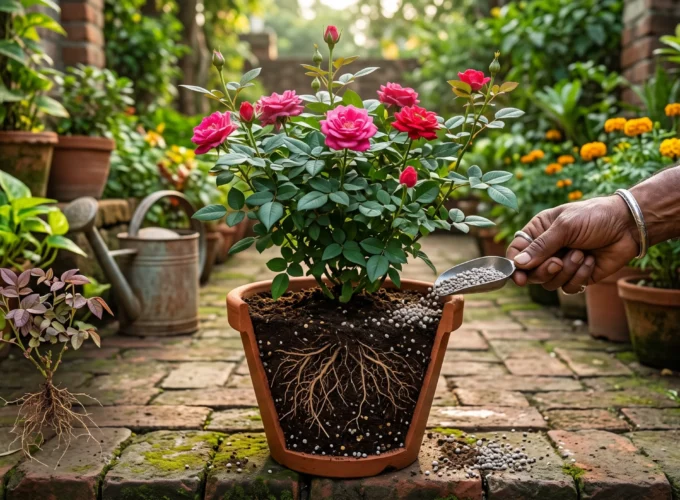
Apply Near Root Zone
Phosphorus works best close to active roots.
Avoid spreading fertilizer too far away.
Use Balanced Quantity
More fertilizer does not always mean better growth.
Excess phosphorus may create a nutrient imbalance.
Water Properly
Moderate watering helps nutrients move into the root zone.
Combine with Healthy Soil
Healthy soil improves nutrient availability naturally.
Organic matter and proper drainage help.
Organic and Mineral Sources of Phosphorus
Phosphorus may come from:
- Bone meal
- Rock phosphate
- PROM fertilizer
- Organic phosphorus sources
These products support long-term soil fertility and healthier growth.
Explore phosphorus nutrition products at Shridhara Greens PROM Fertilizer Collection.
Common Mistakes While Using Phosphorus Fertilizer
Applying Without Identifying Deficiency
Not every plant problem requires phosphorus.
Always observe symptoms first.
Overusing Fertilizer
Excess phosphorus may affect nutrient balance and plant health.
Ignoring Soil Health
Fertilizer performs best in healthy, biologically active soil.
Expecting Instant Results
Phosphorus improves growth gradually, especially in root development.
Signs Phosphorus Fertilizer Is Working
Healthy improvement may include:
- Better root growth
- Improved flowering
- Stronger stems
- Healthier foliage
- Better fruit set
Results usually appear gradually as plant health improves.
Frequently Asked Questions
What are the signs of phosphorus deficiency in plants?
Common signs include slow growth, poor flowering, weak roots, and dark or purplish leaves.
Which plants need phosphorus fertilizer most?
Flowering plants, fruit plants, vegetables, and seedlings often require phosphorus support.
Can too much phosphorus harm plants?
Yes. Excess phosphorus may create nutrient imbalance.
Is phosphorus important for flowering?
Yes. Phosphorus supports flower formation and fruit production.
How long does phosphorus fertilizer take to work?
Results vary depending on soil condition and plant type, but improvement is generally gradual.
Final Thoughts
So, how do you know if your plants need phosphorus fertilizer?
Watch for signs like:
- Slow growth
- Poor roots
- Weak flowering
- Reduced fruiting
- Dark or unusual leaf color
Phosphorus plays a vital role in healthy plant development, especially during root growth and flowering stages.
The key is not simply adding fertilizer — but understanding your plant’s nutritional needs and applying balanced plant nutrition.
For gardeners across India looking for healthier flowering and stronger root development, phosphorus fertilizer can become an important part of successful plant care.
If you are looking for trusted phosphorus fertilizer and plant nutrition solutions, visit Shridhara Greens and explore the premium PROM Fertilizer Collection for healthier and more productive plants.