Fertilizers are essential for healthy plant growth, vibrant flowers, stronger roots, and productive gardens. Whether you grow indoor plants, terrace vegetables, flowering plants, or herbs, fertilizers help provide the nutrients plants need to thrive.
But while many gardeners focus on choosing the right fertilizer, they often ignore another equally important topic:
How should fertilizers be stored safely at home?
Improper fertilizer storage can:
- Reduce fertilizer effectiveness
- Create moisture damage
- Cause foul smell
- Attract pests
- Increase safety risks
- Harm children or pets
- Affect plant performance
In Indian homes where space is often limited, fertilizers are commonly stored on balconies, terraces, kitchen corners, or utility areas. Without proper storage methods, fertilizers may lose quality much faster — especially during monsoon and humid weather.
The good news is that safe fertilizer storage is simple when you follow a few important precautions.
In this detailed guide, you will learn:
- Why fertilizer storage matters
- How to store organic and chemical fertilizers safely
- Common fertilizer storage mistakes
- Best storage containers
- Safety tips for homes with children and pets
- How Indian weather affects fertilizer storage
Why Proper Fertilizer Storage Is Important
Fertilizers contain nutrients that react to:
- Moisture
- Heat
- Air exposure
- Sunlight
- Humidity
Improper storage can cause fertilizers to:
- Clump together
- Lose nutrients
- Develop fungal contamination
- Become ineffective
- Produce unpleasant odor
Some fertilizers may even become unsafe if stored carelessly around children, food items, or pets.
Good fertilizer storage helps maintain:
- Product quality
- Nutrient effectiveness
- Gardening safety
- Longer shelf life
For high-quality gardening products and plant nutrition solutions, you can explore Shridhara Greens and browse premium Organic Fertilizers for Plants suitable for Indian gardening conditions.
Types of Fertilizers Commonly Stored at Home
Different fertilizers require slightly different storage care.
Organic Fertilizers
Examples include:
- Vermicompost
- Compost
- Neem cake
- Bone meal
- Seaweed fertilizers
- Organic plant boosters
Organic fertilizers are generally safer but more sensitive to moisture and pests.
Chemical Fertilizers
Examples include:
- NPK fertilizers
- Urea
- Water-soluble fertilizers
- Micronutrient mixes
These fertilizers may absorb moisture quickly and require sealed storage.
Liquid Fertilizers
Liquid fertilizers require:
- Leak-proof storage
- Cool temperatures
- Proper bottle sealing
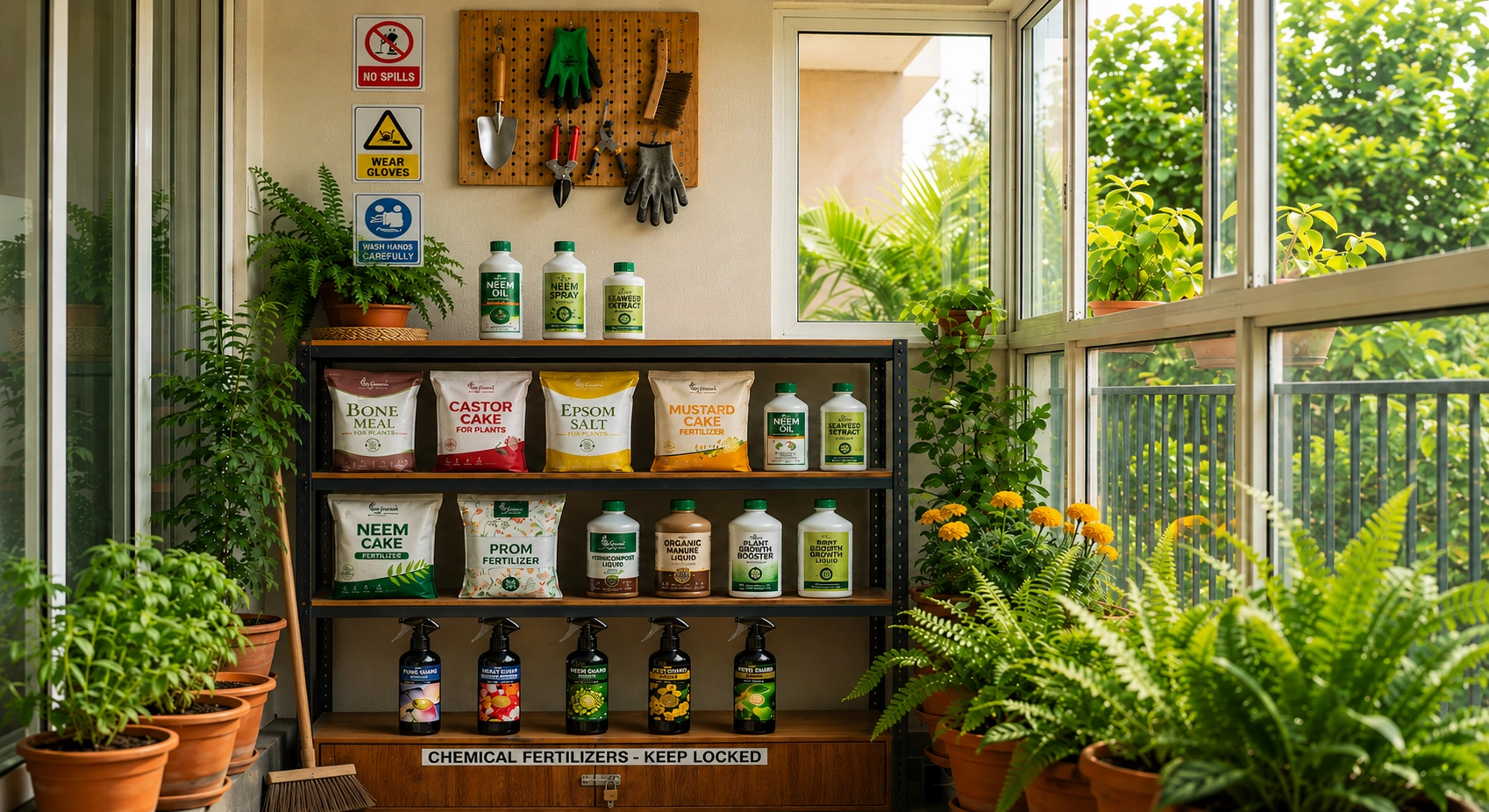
Best Place to Store Fertilizers at Home
The ideal fertilizer storage area should be:
- Cool
- Dry
- Well-ventilated
- Away from direct sunlight
- Safe from children and pets
Common home storage areas include:
- Utility cabinets
- Garden shelves
- Balcony storage boxes
- Terrace cabinets
- Dedicated gardening containers
Avoid storing fertilizers near:
- Food items
- Drinking water
- Cooking areas
- Medicine cabinets
Why Moisture Is the Biggest Problem
Moisture is one of the biggest enemies of fertilizers.
Humidity and water exposure can:
- Reduce nutrient quality
- Cause clumping
- Trigger fungal growth
- Damage packaging
- Reduce shelf life
This becomes especially important during Indian monsoon season.
Many fertilizers absorb moisture directly from air, particularly:
- Water-soluble fertilizers
- Powder fertilizers
- Organic compost products
That is why airtight storage is extremely important.
How to Store Fertilizers Safely at Home
1. Keep Fertilizers in airtight containers
Always transfer fertilizers into:
- Sealed plastic containers
- Airtight buckets
- Moisture-resistant storage jars
This protects them from:
- Humidity
- Rainwater
- Air exposure
- Pest infestation
Transparent labeling also helps avoid confusion.
2. Store Away from Direct Sunlight
Direct heat and sunlight may:
- Reduce fertilizer quality
- Damage liquid formulations
- Increase decomposition in organic fertilizers
Cool shaded storage areas work best.
3. Keep Fertilizers Away from Children and Pets
Many fertilizers are not meant for direct human or pet contact.
Store them:
- On higher shelves
- In locked cabinets
- In dedicated gardening storage areas
Safety becomes especially important in homes with small children.
4. Keep Different Fertilizers Separate
Do not mix fertilizers randomly during storage.
Different fertilizers may:
- React differently to moisture
- Have separate nutrient balances
- Require different application methods
Keep original labels intact whenever possible.
5. Use Original Packaging If Possible
Original fertilizer packaging usually contains:
- Storage instructions
- Expiry information
- Usage guidelines
- Safety precautions
If transferring products into containers, label them clearly.
6. Avoid Wet Scoops and Hands
Never use wet tools while handling fertilizers.
Moisture contamination may reduce product quality quickly.
7. Seal Bags Properly After Use
Open fertilizer bags attract:
- Moisture
- Ants
- Fungus
- Insects
Always seal packages tightly after each use.
How to Store Organic Fertilizers Properly
Organic fertilizers require extra care because they contain natural biodegradable materials.
Vermicompost Storage
Store vermicompost:
- In breathable containers
- Away from excessive heat
- In dry shaded conditions
Avoid complete airtight sealing if moisture is trapped inside.
Neem Cake Storage
Neem cake should remain dry and cool to prevent fungal growth.
Compost Storage
Compost should not become overly wet during storage.
Good airflow helps maintain quality.
How to Store Liquid Fertilizers Safely
Liquid fertilizers require:
- Tight bottle caps
- Upright positioning
- Cool storage conditions
Avoid:
- Freezing temperatures
- Direct sunlight
- Heat exposure
Always shake bottles before use if recommended.
Common Fertilizer Storage Mistakes
Storing Fertilizers Outdoors During Rain
Monsoon humidity damages fertilizers quickly.
Leaving Fertilizer Bags Open
Open packaging attracts moisture and pests.
Storing Near Food or Kitchen Items
Fertilizers should always remain separate from edible products.
Mixing Different Fertilizers Together
Improper mixing may reduce effectiveness or create imbalance.
Ignoring Expiry and Shelf Life
Old fertilizers may lose nutrient strength over time.
How the Indian Climate Affects Fertilizer Storage
India’s climate varies significantly across regions.
During Monsoon
Humidity becomes extremely high.
Extra precautions include:
- Airtight containers
- Elevated storage
- Moisture protection
During Summer
Excess heat may damage:
- Liquid fertilizers
- Organic products
- Sensitive formulations
Shaded storage is essential.
Coastal Areas
Salt-heavy, humid air may affect fertilizer stability faster.
Signs Your Fertilizer Has Gone Bad
You should inspect fertilizers regularly.
Common warning signs include:
- Strong foul smell
- Excessive clumping
- Mold growth
- Leakage
- Insect infestation
- Color changes
Damaged fertilizers may become less effective for plants.
How Long Can Fertilizers Be Stored?
Storage life depends on fertilizer type.
Organic Fertilizers
Usually best used within several months for maximum effectiveness.
Chemical Fertilizers
Can often last longer if protected from moisture.
Liquid Fertilizers
Always check manufacturer expiry recommendations.
Why Proper Storage Improves Gardening Results
Good fertilizer storage helps preserve:
- Nutrient balance
- Product effectiveness
- Plant safety
- Soil health
Properly stored fertilizers provide:
- Better flowering
- Healthier roots
- Improved plant growth
- Consistent gardening results
Best Fertilizers for Home Gardening
Home gardeners commonly prefer:
- Vermicompost
- Seaweed fertilizers
- Neem cake
- Organic liquid fertilizers
- Compost-based fertilizers
These products support safer and more sustainable gardening.
Explore trusted gardening products and fertilizers at Shridhara Greens Organic Fertilizers Collection.
Frequently Asked Questions
Can fertilizers be stored inside the house?
Yes, fertilizers can be stored indoors if kept in sealed containers away from children, pets, food, and moisture.
Is sunlight harmful to fertilizers?
Yes. Excessive sunlight and heat may reduce fertilizer quality and effectiveness.
Can organic fertilizers expire?
Organic fertilizers may gradually lose effectiveness if exposed to moisture or poor storage conditions.
What is the safest container for fertilizer storage?
Airtight, moisture-resistant plastic containers work well for most fertilizers.
Should fertilizers be refrigerated?
No. Most fertilizers do not require refrigeration unless specifically mentioned by the manufacturer.
Final Thoughts
Proper fertilizer storage is just as important as choosing the right fertilizer itself.
Whether you use organic fertilizers, liquid plant nutrients, compost, or plant growth boosters, safe storage helps preserve quality, maintain effectiveness, and improve gardening safety at home.
The key principles are simple:
- Keep fertilizers dry
- Protect them from sunlight
- Store safely away from children and pets
- Use airtight containers
- Avoid moisture exposure
For Indian gardeners dealing with humidity, heat, and changing weather conditions, proper storage becomes even more important for long-term gardening success.
If you are looking for trusted organic fertilizers, gardening essentials, and plant nutrition products for healthy home gardening, visit Shridhara Greens and explore the premium Organic Fertilizers for Plants Collection for naturally healthier plants and safer gardening.