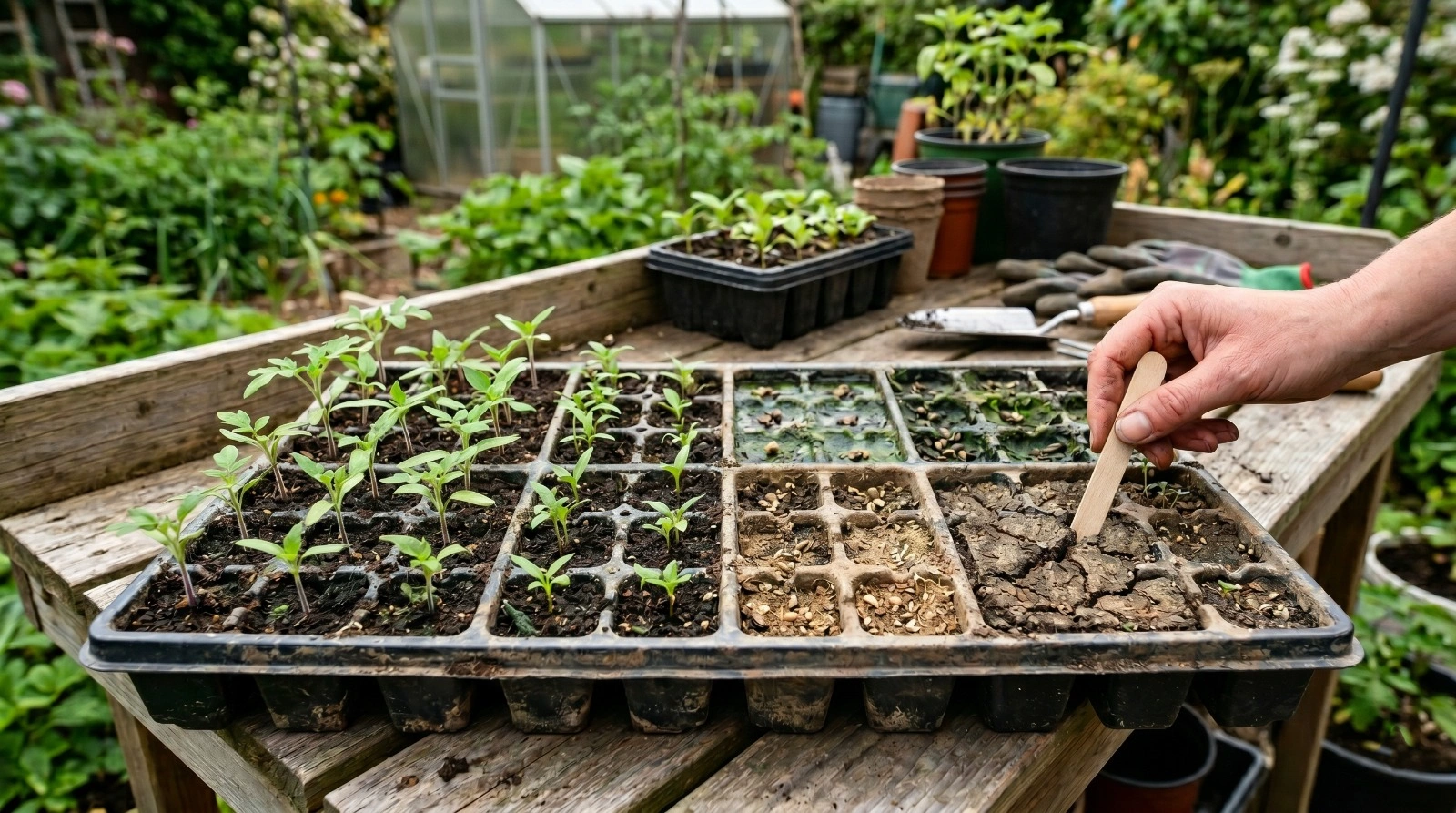
Few things are more frustrating for a gardener than sowing seeds, watering them carefully, waiting patiently—and seeing nothing happen.
Whether you’re growing:
- Vegetables
- Herbs
- Flowers
- Microgreens
- Terrace garden plants
Poor seed germination can be disappointing and confusing.
Many gardeners immediately blame:
- Poor-quality seeds
- Weather
- Watering issues
However, one of the most overlooked causes of germination failure is:
The growing media itself.
In fact, even premium-quality seeds may fail if they are planted in the wrong growing medium.
The good news?
Most seed germination problems can be solved by understanding a few common growing media mistakes.
In this guide, you’ll learn:
- Why seeds fail to germinate
- The role of growing media in seed starting
- Common seed germination mistakes
- How to choose the right seed starting mix
- Best practices for successful germination in India
For premium gardening products and growing media solutions, visit Shridhara Greens.
Why Growing Media Matters for Seed Germination
Before a seed becomes a healthy plant, it needs the right environment to wake up and start growing.
Seeds require three basic conditions:
✔ Moisture
✔ Oxygen
✔ Suitable temperature
Your growing media directly affects all three.
A good seed starting medium should:
- Hold moisture without becoming soggy
- Allow air movement around seeds
- Support root development
- Drain excess water properly
- Remain light and loose
When the growing media fails to provide these conditions, germination rates drop significantly.
Mistake #1: Using Heavy Garden Soil for Seed Starting
This is one of the most common mistakes beginners make.
Many gardeners simply fill trays or pots with garden soil and sow seeds.
Unfortunately, garden soil often becomes:
- Dense
- Compact
- Poorly aerated
As a result:
- Tiny roots struggle to emerge
- Water movement becomes uneven
- Oxygen availability decreases
Young seedlings need a lighter environment than mature plants.
Better alternative:
Use a light seed starting mix containing materials such as:
- Cocopeat
- Vermicompost
- Perlite
- Fine compost
Mistake #2: Growing Media Holds Too Much Water
Many gardeners believe:
“Seeds need lots of water.”
Actually, seeds need consistent moisture—not waterlogged conditions.
Overly wet growing media can cause:
- Seed rot
- Fungal growth
- Damping-off disease
- Germination failure
If the growing medium remains soggy for long periods, seeds may never sprout.
Signs of excessive moisture:
- Foul smell
- Green algae
- Constantly wet surface
- Mushy seeds
Mistake #3: Growing Media Dries Out Too Quickly
The opposite problem is equally harmful.
Seeds need steady moisture during germination.
When growing media dries rapidly:
- Seed coats harden
- Germination stops
- Seedlings die before emergence
This often happens when gardeners use:
- Pure sand
- Poor-quality potting mixes
- Media with low water retention
Balanced moisture retention is essential.
Mistake #4: Poor Aeration in the Growing Medium
Many gardeners focus only on watering and forget that seeds also need oxygen.
Seeds respire during germination.
Without sufficient air pockets:
- Oxygen levels drop
- Root growth slows
- Germination becomes weak
A good growing medium contains materials that improve aeration.
Examples include:
- Cocopeat
- Perlite
- Organic growing media blends
Healthy air circulation supports stronger seedlings.
Mistake #5: Using Unsterilized Soil
Garden soil may contain:
- Weed seeds
- Fungal spores
- Harmful pathogens
- Insect eggs
Young seedlings are highly vulnerable.
Contaminated growing media often leads to:
- Seedling diseases
- Rot
- Poor emergence rates
Quality growing media helps reduce these risks.
Mistake #6: Sowing Seeds Too Deep
Many germination failures are blamed on growing media when the real issue is planting depth.
If seeds are buried too deeply:
- Seedlings cannot reach the surface
- Energy reserves become exhausted
As a general rule:
Small seeds should be planted shallowly.
Always follow the recommendations provided for specific seed varieties.
Mistake #7: Using Low-Quality Growing Media
Not all growing media products are equal.
Poor-quality media may suffer from:
- Inconsistent texture
- Poor drainage
- Excess salts
- Low organic matter
This affects germination success directly.
When purchasing growing media, choose products designed specifically for gardening and seed starting.
Mistake #8: Ignoring Cocopeat Quality
Cocopeat has become one of the most popular seed starting media in India.
High-quality cocopeat offers:
- Excellent moisture retention
- Good aeration
- Lightweight texture
- Healthy root support
However, low-grade cocopeat may:
- Drain poorly
- Contain excess salts
- Have inconsistent texture
Quality matters.
What is the best growing medium for Seed Germination?
The ideal seed starting medium should be:
Lightweight
Allows roots to develop easily.
Well-Draining
Prevents waterlogging.
Moisture-Retentive
Keeps seeds hydrated.
Airy
Supports oxygen movement.
Clean
Reduces disease risk.
A balanced mix often includes:
- Cocopeat
- Vermicompost
- Perlite
- Organic matter
Signs Your Growing Media Is Causing Germination Problems
Watch for:
Seeds Rotting Before Sprouting
Usually caused by excess moisture.
White Fungal Growth
Often indicates poor aeration and excessive moisture.
Uneven Germination
May result from inconsistent moisture retention.
Weak Seedlings
Poor media quality can affect early development.
Hard Crusted Surface
Restricts seedling emergence.
Best Seed Germination Practices for Indian Gardeners
Indian weather conditions vary widely, but these tips generally improve success:
Maintain Consistent Moisture
Avoid both soggy and completely dry conditions.
Use Quality Growing Media
Healthy media creates healthy seedlings.
Provide Proper Light After Germination
Most seedlings require adequate light once they emerge.
Ensure Good Drainage
Water should move through the medium without stagnation.
Use Clean Containers
Reduce disease pressure during early growth.
Why Home Gardeners Prefer Cocopeat-Based Growing Media
Cocopeat has become a favorite among Indian gardeners because it:
- Retains moisture efficiently
- Improves aeration
- Supports root development
- Reduces soil compaction
- Works well in seed trays
It is widely used for:
- Vegetable seedlings
- Flower seeds
- Terrace gardening
- Nursery production
Common Seed Germination Myths
“More Water Means Better Germination”
False.
Excess water often causes seed rot.
“Any Soil Works for Seeds”
Not always.
Seedlings require lighter media than mature plants.
“Seeds Germinate Faster in Fertilizer-Rich Soil”
Excess nutrition is usually unnecessary during germination.
Seeds contain their own initial food reserves.
Frequently Asked Questions
Why are my seeds not germinating?
Common reasons include poor growing media, incorrect watering, low temperatures, or planting depth issues.
Can bad growing media stop seeds from sprouting?
Yes. Poor drainage, low aeration, and excessive moisture can prevent germination.
Is cocopeat good for seed germination?
Yes. Quality cocopeat provides moisture retention and aeration that support healthy germination.
Should growing media stay wet all the time?
No. It should remain consistently moist but not waterlogged.
What is the best medium for starting seeds?
A lightweight, well-draining mix containing cocopeat and organic matter is commonly used.
Final Thoughts
If your seeds are not germinating, the problem may not be the seeds themselves.
In many cases, the real issue lies beneath the surface:
The growing media.
Heavy soil, poor drainage, excess moisture, low aeration, and poor-quality seed starting mixes are some of the biggest reasons seeds fail to sprout.
By choosing the right growing media and avoiding these common mistakes, you can dramatically improve germination rates and grow healthier seedlings from the start.
For gardeners across India, successful gardening begins with healthy roots—and healthy roots begin with the right growing medium.
For premium gardening products and growing media solutions, visit Shridhara Greens and give your seeds the best possible start.