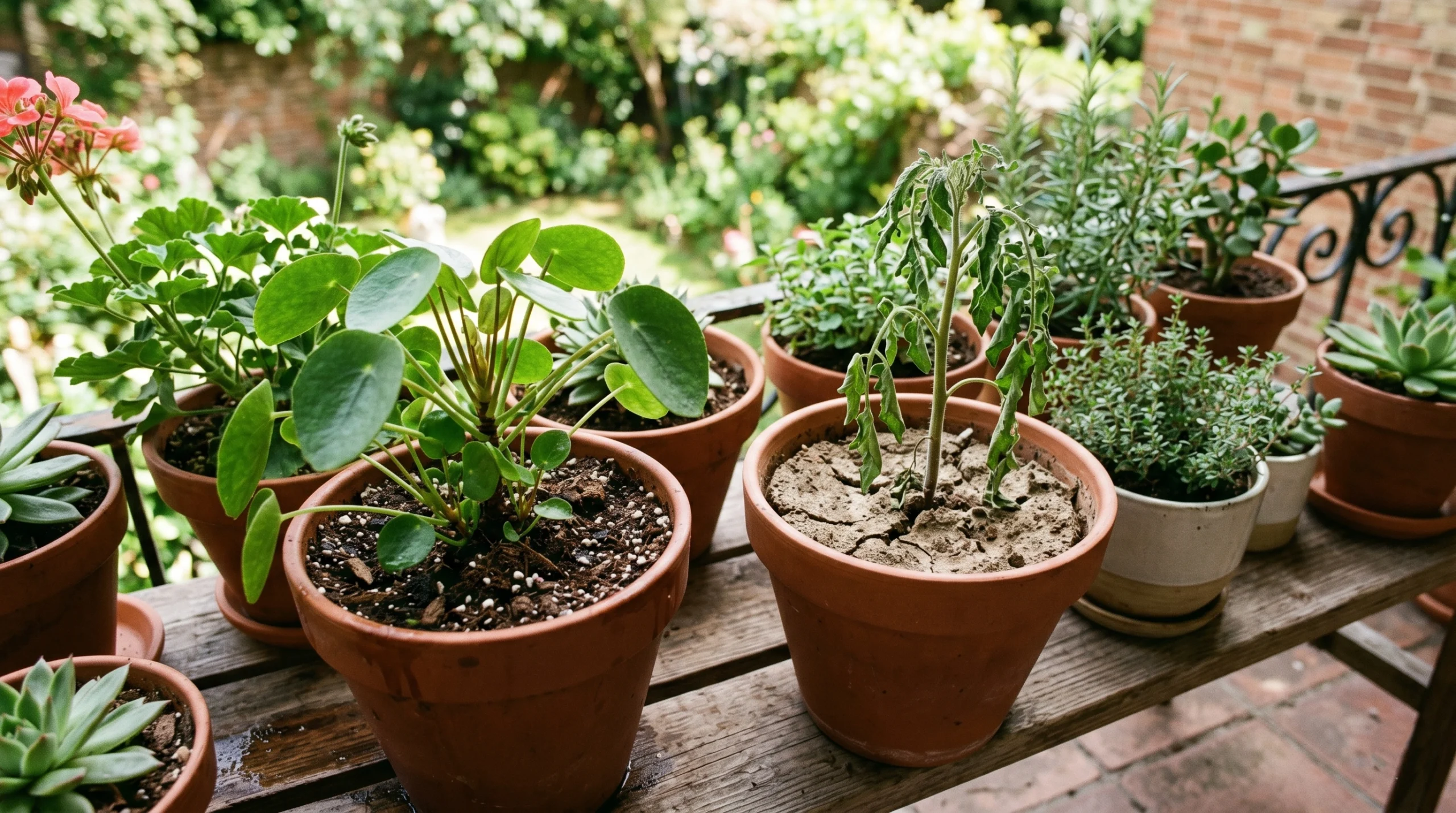
Have you ever watered your potted plants in the morning, only to find them drooping and dry again by evening?
If yes, you’re not alone.
One of the most common complaints among home gardeners is:
“Why do my potted plants dry out so quickly?”
Whether you’re growing:
- Indoor plants
- Flowering plants
- Vegetables
- Herbs
- Terrace garden plants
fast-drying pots can become a constant challenge, especially during Indian summers.
Many gardeners assume they simply need to water more often.
However, the real problem is usually deeper than that.
Factors such as:
- Pot size
- Growing media
- Sunlight exposure
- Root health
- Weather conditions
- Plant type
All play a major role in how quickly a plant loses moisture.
The good news is that most moisture-related problems can be fixed with a few simple adjustments.
In this guide, you’ll learn:
- Why do potted plants dry out quickly
- Common container gardening mistakes
- How to improve moisture retention
- Best growing media for potted plants
- Tips to keep plants healthy during hot weather
For premium gardening products and plant care solutions, visit Shridhara Greens.
Why Potted Plants Dry Faster Than Garden Plants
Before understanding the problem, it’s important to know why potted plants lose moisture faster than plants growing in the ground.
Garden soil has:
- Larger moisture reserves
- Deeper root zones
- Better insulation
Pots, on the other hand, contain limited soil volume.
This means:
- Less water storage
- Faster evaporation
- Quicker temperature changes
As a result, potted plants require more attention when it comes to watering and soil management.
1. Your Pot Is Too Small
One of the biggest reasons plants dry out quickly is using a pot that’s too small.
Small containers:
- Hold less soil
- Retain less moisture
- Heats up faster
This causes water to evaporate rapidly.
Common signs:
- Soil dries within hours
- Frequent wilting
- Roots visible through drainage holes
Larger pots generally hold moisture longer and provide more stable growing conditions.
2. The Growing Media Drains Too Fast
The soil or growing media inside your pot plays a huge role in moisture retention.
Some gardeners use media that drains excessively fast.
Examples include:
- Pure sand
- Low-quality potting mixes
- Media with very little organic matter
While drainage is important, overly fast drainage can leave roots dry.
Ideal growing media should:
- Retain moisture
- Provide aeration
- Support root growth
- Drain excess water
Balanced growing media is the key.
3. Too Much Direct Sunlight
Sunlight is essential for plant growth.
However, excessive sunlight can dramatically increase water loss.
During Indian summers, containers are placed in:
- Balconies
- Terraces
- Rooftops
may experience extreme heat exposure.
This leads to:
- Rapid evaporation
- Dry soil
- Heat stress
Dark-colored pots are especially vulnerable because they absorb more heat.
4. Hot Weather and Wind
Many gardeners focus only on temperature.
But wind can be just as damaging.
Hot air and strong winds:
- Increase evaporation
- Dry soil faster
- Remove moisture from leaves
This is common in:
- Terrace gardens
- Rooftop gardens
- Open balconies
Plants may need additional protection during extreme weather.
5. Root-Bound Plants
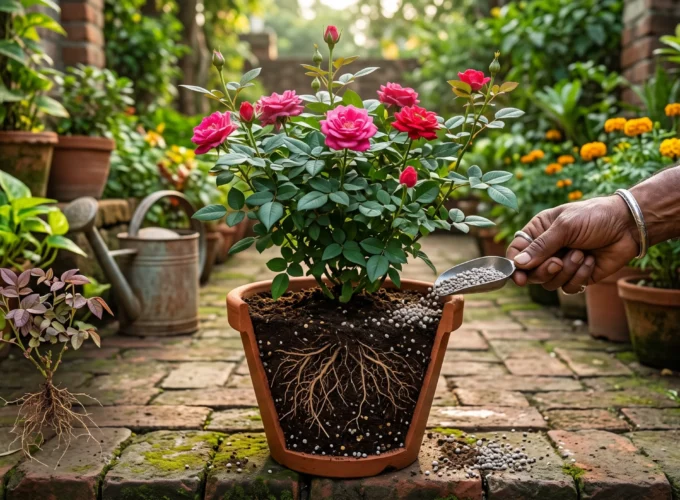
When plants outgrow their containers, roots become crowded.
This condition is called:
Root Bound
Root-bound plants often:
- Absorb water rapidly
- Dry out quickly
- Show poor growth
Signs include:
- Roots circling inside the pot
- Frequent wilting
- Water is running through immediately
Repotting can often solve this issue.
6. Poor Watering Technique
Surprisingly, many gardeners water incorrectly.
Common mistake:
Applying a small amount of water daily.
This encourages shallow roots and poor moisture storage.
Instead:
Water deeply and thoroughly
Deep watering encourages roots to grow deeper and access moisture more effectively.
7. Low Organic Matter in Soil
Organic matter acts like a sponge.
It helps the soil:
- Hold water
- Improve structure
- Support root health
Without enough organic matter, moisture escapes quickly.
Materials that improve water retention include:
- Cocopeat
- Vermicompost
- Compost
- Organic growing media
These ingredients create a healthier root environment.
8. Using Terracotta Pots in Extreme Heat
Terracotta pots are beautiful and popular.
However, they are porous.
This means water evaporates through the pot walls themselves.
During hot weather:
- Soil dries faster
- Moisture loss increases
While terracotta works well for many plants, gardeners may need to water more frequently.
9. Plant Type Matters
Not all plants have the same water requirements.
Some plants naturally consume more water.
Examples include:
High Water Requirement Plants
- Vegetables
- Flowering annuals
- Leafy greens
- Peace lilies
Low Water Requirement Plants
- Succulents
- Cacti
- Snake plants
- ZZ plants
Understanding your plant’s needs helps prevent both overwatering and underwatering.
How to Tell If Your Plant Is Drying Out Too Quickly
Watch for these signs:
Wilting During the Day
Plants may droop even shortly after watering.
Dry Soil Surface
The top layer feels dry soon after watering.
Crispy Leaf Edges
Leaves may become brown and brittle.
Slow Growth
Moisture stress often slows plant development.
Frequent Watering Needs
If you’re watering daily and the plant still struggles, moisture retention may be the issue.
How to Keep Potted Plants Moist Longer
Fortunately, several simple solutions can help.
Use Quality Growing Media
A balanced mix helps retain moisture while maintaining drainage.
Good ingredients include:
- Cocopeat
- Compost
- Vermicompost
- Organic matter
Mulch the Soil Surface
Mulching helps:
- Reduce evaporation
- Maintain soil moisture
- Protect roots
Organic mulch works especially well during summer.
Choose the Right Pot Size
Larger pots provide:
- Better moisture retention
- More stable temperatures
- Improved root development
Water Early in the Morning
Morning watering:
- Reduces evaporation
- Supports daytime hydration
- Helps plants handle heat
Group Plants Together
Plants create a more humid microclimate when grouped.
This reduces moisture loss.
Why Cocopeat Is Popular for Potted Plants
Many Indian gardeners use cocopeat because it:
- Holds moisture efficiently
- Improves aeration
- Supports root development
- Reduces soil compaction
Cocopeat is especially useful in:
- Terrace gardens
- Balcony gardens
- Container gardening
Common Mistakes That Make Pots Dry Faster
❌ Using undersized pots
❌ Growing plants in poor-quality soil
❌ Watering lightly every day
❌ Ignoring root-bound plants
❌ Placing containers in harsh afternoon sun
❌ Using media with low moisture retention
Avoiding these mistakes can dramatically improve plant health.
Frequently Asked Questions
Why do my potted plants dry out every day?
Small pots, hot weather, poor soil, and root-bound conditions are common causes.
How can I make my potting soil hold more water?
Adding organic matter, such as compost or cocopeat, helps improve moisture retention.
Do larger pots stay moist longer?
Yes. Larger containers generally retain water longer than small pots.
Is daily watering bad?
Not always, but deep watering is usually more effective than frequent shallow watering.
Why do terrace garden plants dry faster?
Terrace gardens experience more heat, sunlight, and wind exposure.
Final Thoughts
If your potted plants are drying out too quickly, the problem usually isn’t just a lack of water.
More often, it’s a combination of:
- Small pots
- Poor growing media
- Heat exposure
- Root crowding
- Improper watering habits
The solution is not simply watering more—it’s creating a growing environment that helps retain moisture while keeping roots healthy.
By improving your potting mix, choosing suitable containers, and following proper watering practices, you can keep your plants hydrated, healthier, and more productive throughout the year.
For premium gardening products and plant care solutions, visit Shridhara Greens and help your potted plants thrive naturally.