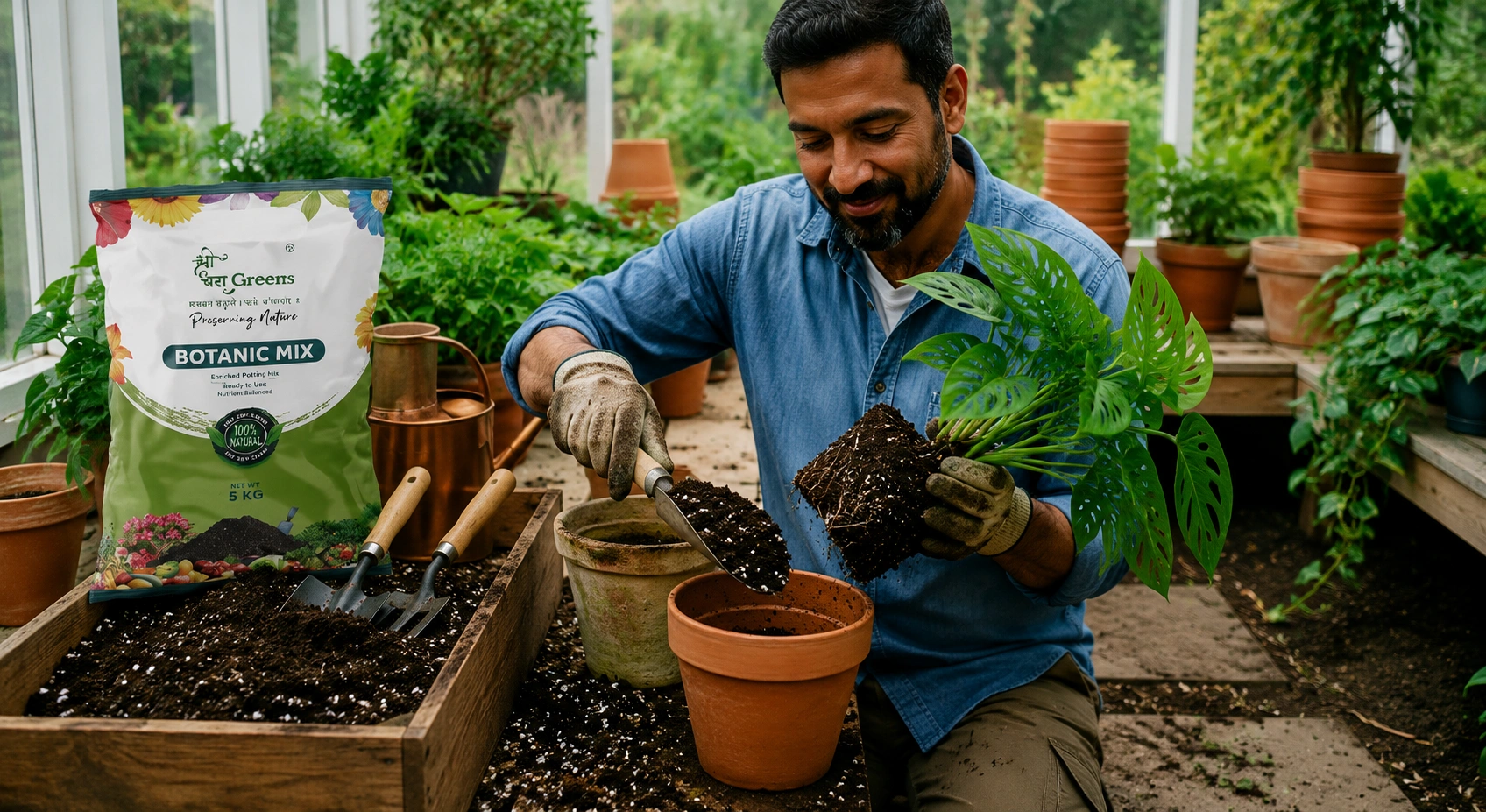
Many home gardeners focus on watering schedules, fertilizers, and sunlight requirements but often forget one crucial part of plant care:
The growing media inside the pot.
Whether you’re growing:
- Indoor plants
- Flowering plants
- Vegetables
- Herbs
- Fruit plants
- Terrace garden plants
The growing media is the foundation of healthy plant growth.
However, unlike garden soil in the ground, potting media doesn’t remain effective forever.
Over time, growing media can:
- Lose nutrients
- Become compacted
- Develop drainage issues
- Retain less moisture
- Affect root health
This leads many gardeners to ask:
How often should you replace growing media in pots?
The answer depends on:
- Plant type
- Pot size
- Growing media quality
- Watering habits
- Climate conditions
In this guide, you’ll learn:
- When to replace potting media
- Signs your growing media needs attention
- How to extend the life of potting mixes
- Best growing media practices for Indian gardeners
For premium gardening products and growing media solutions, visit Shridhara Greens and explore the complete Soil & Growing Media Collection.
What Is Growing Media?
Growing media refers to the material that supports plant roots and helps provide:
- Water
- Oxygen
- Nutrients
- Root stability
Common growing media ingredients include:
- Cocopeat
- Vermicompost
- Perlite
- Compost
- Potting soil
- Organic matter
Unlike natural garden soil, growing media is specifically designed for container gardening.
Does Growing Media Expire?
Technically, growing media does not “expire” like food.
However:
Its performance gradually declines over time.
This happens because:
- Organic matter decomposes
- Nutrients are used by plants
- Watering washes nutrients away
- Soil structure changes
- Roots occupy more space
As a result, even healthy-looking pots may eventually need media replacement or improvement.
General Rule: How Often Should Growing Media Be Replaced?
For most potted plants:
Every 12–24 Months
It is a reasonable guideline for refreshing or replacing growing media.
However, this varies depending on:
Fast-Growing Plants
May require attention sooner.
Indoor Plants
Often last longer because growth is slower.
Vegetables and Flowering Plants
Usually consume nutrients faster and may need more frequent media improvement.
Rather than relying only on time, watch for warning signs.
Sign #1: Water Stays on the Surface
Healthy growing media absorbs water evenly.
If water begins pooling on top before soaking in:
- Soil may be compacted
- Aeration may be poor
- The media structure may have degraded
This often indicates the need for refreshing.
Sign #2: Water Drains Too Quickly
The opposite problem can also occur.
When water immediately runs through the pot:
- Moisture retention may be reduced
- Organic matter may have broken down
- Media quality may have declined
Plants may dry out more quickly than usual.
Sign #3: Plant Growth Has Slowed
If your plant receives:
✔ Proper sunlight
✔ Adequate water
✔ Regular fertilizer
Yet growth remains poor; the growing media may be contributing to the problem.
Degraded media often limit:
- Root expansion
- Oxygen availability
- Nutrient absorption
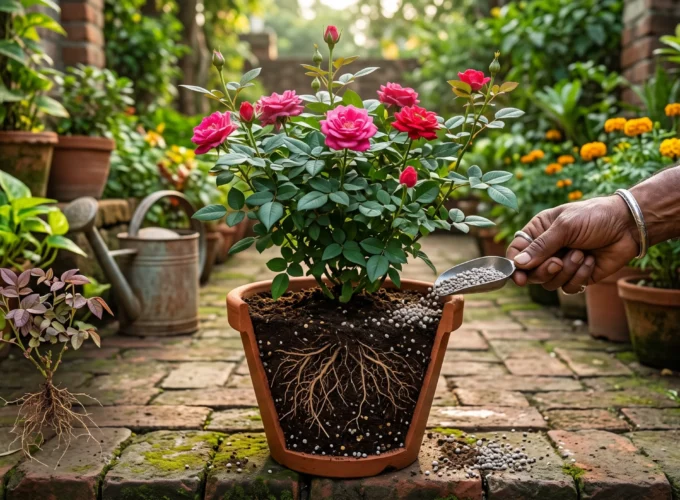
Sign #4: Roots Are Taking Over the Pot
Over time, roots occupy more and more space.
This reduces the amount of growing media available.
Common signs include:
- Roots visible through drainage holes
- Frequent wilting
- Water disappearing quickly
In such cases, repotting and media replacement often help.
Sign #5: The Soil Has Become Hard and Compact
Healthy growing media should remain:
- Loose
- Airy
- Well-draining
Compacted media restricts:
- Oxygen movement
- Water flow
- Root growth
If the soil feels hard like clay, it may be time to refresh it.
Sign #6: Yellow Leaves Despite Fertilizing
Many gardeners assume yellow leaves always indicate nutrient deficiency.
However, degraded growing media can reduce nutrient uptake even when fertilizer is present.
Poor root conditions often create nutrient-related symptoms.
Sign #7: Increased Pest or Fungal Problems
Old growing media may become more vulnerable to:
- Fungus gnats
- Mold
- Fungal growth
- Soil-borne issues
Refreshing the media can improve overall plant health.
What Happens If You Never Replace Growing Media?
Over time, plants may experience:
Reduced Growth
Roots struggle to function efficiently.
Poor Flowering
Plants may produce fewer blooms.
Weak Root Systems
Compacted media limit development.
Watering Problems
Both overwatering and underwatering become more likely.
Lower Nutrient Availability
Even with fertilizers, plants may struggle to absorb nutrients effectively.
Do All Plants Need Full Media Replacement?
Not always.
In many cases:
Top Dressing Works Well
Top dressing involves replacing the upper layer of growing media with fresh material.
This can improve:
- Nutrient availability
- Soil structure
- Moisture retention
without disturbing the roots.
How to Refresh Growing Media Without Repotting
For large pots or mature plants:
Remove the top few centimeters of old media
Add fresh growing media
Incorporate organic matter
Apply compost or vermicompost
This helps restore soil quality.
Best Growing Media Components for Healthy Pots
A high-quality potting mix often includes:
Cocopeat
Improves moisture retention and aeration.
Vermicompost
Provides organic nutrition.
Perlite
Enhances drainage and oxygen flow.
Organic Compost
Supports microbial activity and soil fertility.
A balanced blend creates healthier growing conditions.
Growing Media and Indian Climate
Indian gardeners face unique challenges.
Summer
Extreme heat accelerates media breakdown and moisture loss.
Monsoon
Heavy rainfall can compact soil and wash away nutrients.
Winter
Growth slows, but media quality remains important.
Regular maintenance helps pots perform well throughout the year.
How to Make Growing Media Last Longer
You can extend the life of your potting mix by:
✔ Avoiding overwatering
✔ Using organic matter regularly
✔ Aerating the soil surface
✔ Top dressing annually
✔ Choosing quality growing media
These practices improve long-term performance.
Common Growing Media Mistakes
Using Only Garden Soil
Garden soil often compacts inside pots.
Ignoring Drainage Problems
Poor drainage accelerates root issues.
Never Refreshing the Potting Mix
Growing media naturally degrades with time.
Using Low-Quality Potting Media
Quality ingredients make a significant difference.
Why Modern Gardeners Prefer Soilless Growing Media
Many gardeners now use soilless growing media because they offer:
- Better drainage
- Improved aeration
- Cleaner gardening
- Consistent quality
- Healthier root development
These benefits make them ideal for:
- Terrace gardening
- Balcony gardening
- Indoor plants
- Container gardening
Explore premium growing media solutions at Shridhara Greens Soil & Growing Media Collection.
Frequently Asked Questions
How often should I replace potting soil?
Most potted plants benefit from refreshing or replacing growing media every 1–2 years.
Can I reuse old growing media?
Yes, if it remains healthy and is properly refreshed with organic matter and nutrients.
How do I know if growing media is exhausted?
Signs include poor growth, compaction, drainage issues, and reduced moisture retention.
Is top dressing enough?
For many plants, annual top dressing helps maintain media quality.
What is the best growing medium for pots?
Balanced mixes containing cocopeat, vermicompost, compost, and perlite are commonly used.
Final Thoughts
Growing media is not something you set and forget.
Over time, even the best potting mixes lose structure, nutrients, and performance.
If you notice:
- Slow growth
- Compacted soil
- Poor drainage
- Frequent watering issues
- Weak flowering
Your growing media may need attention.
For most container plants, refreshing or replacing growing media every 12–24 months helps maintain healthy roots, better nutrient absorption, and stronger plant growth.
After all, healthy plants start with healthy roots—and healthy roots start with the right growing media.
For premium growing media, soil conditioners, and gardening solutions, visit Shridhara Greens and explore the complete Soil & Growing Media Collection for thriving plants and healthier gardens.