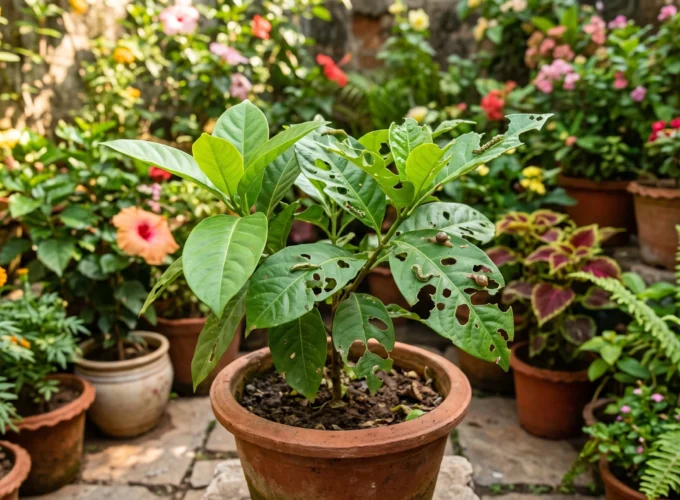
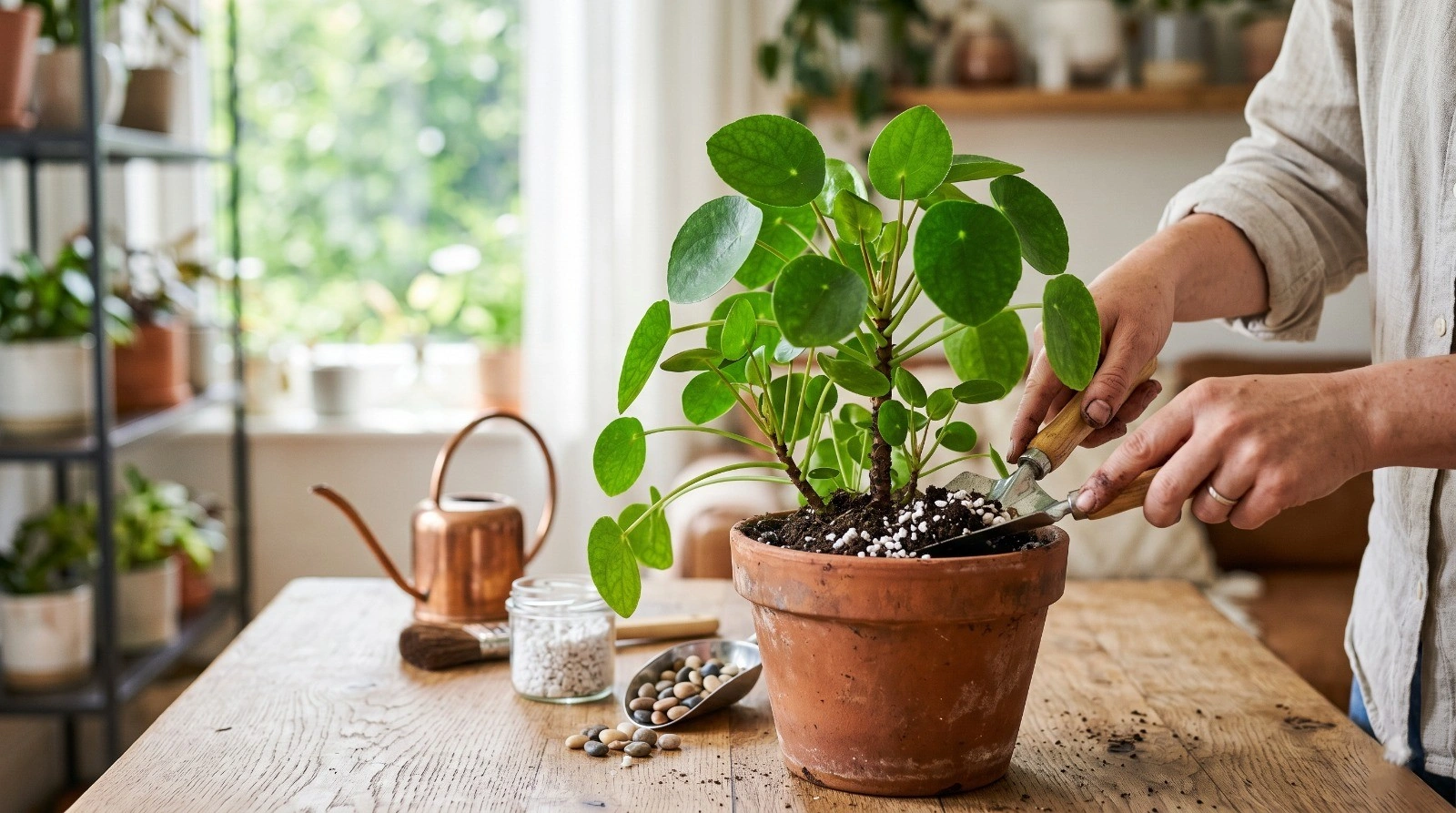
Have you noticed any of these problems?
- Soil stays wet for days
- Leaves turn yellow
- Plants look wilted despite watering
- Fungus appears on the soil surface
- Roots smell unpleasant
If yes, poor drainage could be the reason.
One of the biggest causes of unhealthy houseplants, terrace garden plants, and container plants is waterlogged soil. When excess water remains trapped around the roots, plants struggle to absorb oxygen and nutrients.
The first advice most gardeners hear is:
“Repot the plant.”
While repotting can solve drainage issues, it isn’t always practical.
Maybe:
- The plant is too large
- It’s flowering
- You recently repotted it
- You don’t want to disturb the roots
The good news is:
You can often improve drainage without repotting your plants.
In this guide, you’ll learn:
- Why does poor drainage happen
- Signs your plant has drainage problems
- How to improve drainage without repotting
- Ways to prevent root rot
- Best practices for healthier container gardening
For premium gardening products and plant care solutions, visit Shridhara Greens.
Why Good Drainage Matters
Roots need two things to survive:
✔ Water
✔ Oxygen
Many gardeners focus only on watering.
However, roots also need air spaces within the soil.
When soil remains saturated:
- Oxygen levels decrease
- Roots weaken
- Nutrient absorption slows
- Root rot risk increases
Good drainage allows excess water to leave the container while maintaining healthy moisture levels.
Signs Your Plant Has Poor Drainage
Before fixing the problem, it’s important to identify it.
Common symptoms include:
Soil Remains Wet for Several Days
Healthy potting mixes should gradually dry between waterings.
If the soil remains constantly wet, drainage may be poor.
Yellow Leaves
Excess moisture often causes leaves to yellow.
Many gardeners mistake this for a nutrient deficiency.
Wilting Despite Moist Soil
A plant can look thirsty even when the soil is wet.
This happens because damaged roots cannot absorb water properly.
Fungus or Algae on Soil
Constant moisture encourages fungal growth.
Foul Odor from the Pot
A sour smell may indicate root stress or root rot.
Why Drainage Problems Develop
Poor drainage can happen for several reasons.
Common causes include:
- Heavy soil mixes
- Excessive watering
- Blocked drainage holes
- Root-bound plants
- Soil compaction
- Low-quality potting media
Understanding the cause helps you choose the best solution.
1. Loosen the Top Layer of Soil
One of the simplest ways to improve drainage is to gently aerate the soil surface.
Over time, potting soil becomes compacted.
Compacted soil:
- Restricts airflow
- Slows water movement
- Reduces root oxygen
What to do:
Carefully loosen the top 1–2 inches of soil using:
- A small hand fork
- Chopsticks
- A garden tool
Avoid damaging major roots.
This improves:
- Air circulation
- Water penetration
- Surface drying
2. Reduce Watering Frequency
Many drainage problems are actually watering problems.
If the soil remains wet for long periods:
Stop watering on a fixed schedule.
Instead:
Check soil moisture first.
Water only when needed.
This simple change often improves root health significantly.
3. Improve Airflow Around the Plant
Poor airflow slows evaporation.
This is especially common with:
- Indoor plants
- Crowded balconies
- Covered terraces
Better air circulation helps soil dry more evenly.
Simple solutions:
- Increase spacing between pots
- Open windows when possible
- Avoid overcrowding plants
4. Elevate Pots Slightly
Many gardeners place pots directly on the floor.
This can partially block drainage holes.
Solution:
Raise containers using:
- Pot feet
- Bricks
- Plant stands
This allows:
- Better water escape
- Improved airflow beneath the pot
A small adjustment can make a noticeable difference.
5. Clear Blocked Drainage Holes
Sometimes the problem isn’t the soil—it’s the drainage holes.
Drainage holes may become blocked by:
- Roots
- Soil particles
- Debris
Check regularly:
If possible, gently inspect the bottom of the container.
Clearing blocked holes often improves drainage immediately.
6. Add Dry Organic Material to the Surface
In some cases, adding light organic material to the top layer can help regulate moisture.
Examples include:
- Cocopeat
- Fine compost
- Organic growing media
These materials may improve:
- Surface structure
- Aeration
- Moisture balance
Avoid creating a dense layer that traps water.
7. Increase Sunlight Exposure (When Appropriate)
Sunlight influences how quickly soil dries.
Plants kept in extremely low light often experience:
- Slower water use
- Constantly moist soil
- Increased root problems
If suitable for the plant:
Move it to a brighter location.
However, avoid exposing shade-loving plants to harsh direct sunlight.
8. Use a Soil Aeration Tool
For larger containers that cannot be repotted, soil aeration tools can help.
Gently creating vertical air channels allows:
- Better oxygen movement
- Faster drying
- Improved root health
This technique is especially useful for:
- Large decorative pots
- Mature plants
- Terrace garden containers
9. Remove Water from Saucers Immediately
Many gardeners overlook this issue.
When excess water collects in saucers:
- Soil reabsorbs moisture
- Drainage slows
- Root zones remain wet
Best practice:
Empty saucers shortly after watering.
How to Prevent Root Rot Without Repotting
Root rot is one of the biggest risks associated with poor drainage.
To reduce risk:
✔ Avoid overwatering
✔ Improve airflow
✔ Clear drainage holes
✔ Aerate soil regularly
✔ Remove standing water
Healthy roots recover more easily when oxygen becomes available again.
Why Cocopeat Helps Improve Drainage and Moisture Balance
Many gardeners think drainage means making the soil dry faster.
Actually, the goal is:
Balancing moisture retention and airflow.
Cocopeat is popular because it:
- Holds moisture efficiently
- Improves aeration
- Reduces compaction
- Supports healthy roots
This balance makes it useful for:
- Indoor plants
- Terrace gardens
- Container gardening
Common Drainage Myths
“Adding More Water Fixes Wilting”
Not always.
Plants suffering from root stress may wilt even in wet soil.
“Wet Soil Means Healthy Soil”
False.
Healthy soil contains both moisture and oxygen.
“Repotting Is Always Necessary”
Many drainage issues can be improved through proper soil management and watering adjustments.
Best Plants That Are Sensitive to Poor Drainage
Certain plants dislike constantly wet soil.
Examples include:
- Snake plants
- Succulents
- Cacti
- ZZ plants
- Jade plants
These plants often develop root problems quickly when drainage is poor.
Frequently Asked Questions
Can I improve drainage without repotting?
Yes. Soil aeration, watering adjustments, airflow improvements, and clearing drainage holes can help significantly.
Why is my soil staying wet for so long?
Common causes include compacted soil, low light, poor airflow, and blocked drainage holes.
How do I know if my plant has drainage problems?
Yellow leaves, soggy soil, fungus growth, and foul odors are common signs.
Does sunlight help soil dry faster?
Yes. Brighter conditions generally increase evaporation and water use.
Should I water less if drainage is poor?
Yes. Always check soil moisture before watering again.
Final Thoughts
Poor drainage is one of the most common reasons plants struggle in containers.
Fortunately, you don’t always need to repot your plant to solve the problem.
Simple steps such as:
- Aerating the soil
- Improving airflow
- Elevating pots
- Clearing drainage holes
- Adjusting watering habits
can dramatically improve root health and plant growth.
Remember:
Healthy roots need both water and oxygen.
Finding the right balance is the secret to thriving indoor plants, balcony gardens, and terrace gardens.
For premium gardening products and plant care solutions, visit Shridhara Greens and help your plants grow healthier from the roots up.